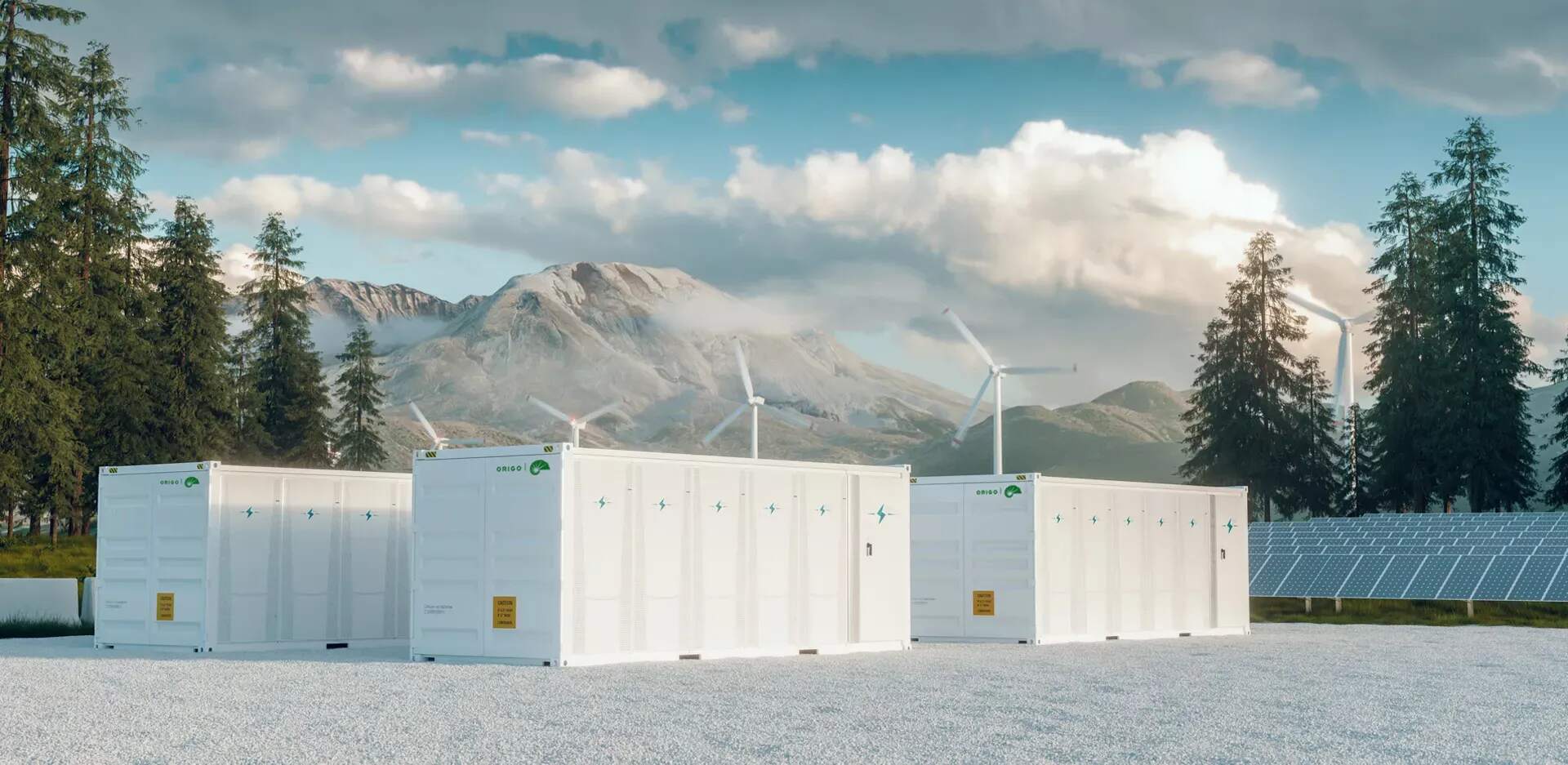
Advances In Energy Storage: From Next-generation Batteries To Grid-scale Integration
The global transition towards a decarbonized energy system is intrinsically linked to the development of advanced, reliable, and cost-effective energy storage solutions. As the penetration of intermittent renewable sources like solar and wind power continues to rise, the ability to store energy for later use becomes paramount for grid stability, energy security, and the full realization of a sustainable energy future. The field of energy storage is currently experiencing a period of unprecedented innovation, driven by breakthroughs in materials science, electrochemistry, and systems engineering. This article explores the latest research progress, highlighting key technological advancements and outlining the future trajectory of this critical domain.
The Reign and Evolution of Lithium-Ion Batteries
Lithium-ion (Li-ion) batteries continue to dominate the portable electronics and electric vehicle (EV) markets, and their evolution remains a central focus of research. The primary goals are to increase energy density, enhance safety, reduce costs, and eliminate dependency on critical materials like cobalt. The most significant recent progress lies in the development of next-generation anode and cathode chemistries.
On the anode front, the long-awaited commercialization of silicon-based anodes is gaining momentum. Silicon offers a theoretical capacity nearly ten times greater than that of conventional graphite. However, its massive volume expansion (~300%) during lithiation has historically led to rapid mechanical degradation and failure. Recent breakthroughs involve sophisticated nanostructuring, such as silicon nanowires and porous silicon-carbon composites, which accommodate the volume change while maintaining electrical contact. Companies like Sila Nanotechnologies and Amprius are now producing batteries with silicon-dominant anodes, offering 20-40% higher energy density for EVs and consumer electronics (Kovalenko et al., 2023).
Simultaneously, cathode chemistry is undergoing a revolution. The shift towards high-nickel, low-cobalt layered oxides (e.g., NMC 811, NMA) is well underway, improving energy density and reducing cost. More profoundly, research into lithium-rich manganese-rich (LMR) cathodes and disordered rock-salts (DRX) promises even greater capacities by leveraging anion redox chemistry. While stability issues persist, surface coatings and dopants are showing promise in mitigating voltage fade and oxygen release (Lee et al., 2024). Furthermore, the solid-state battery, which replaces the flammable liquid electrolyte with a solid counterpart, represents the holy grail for safety and energy density. Companies like QuantumScape have demonstrated solid-state cells with a lithium-metal anode, potentially doubling the range of EVs. The key challenges remain scaling up production and ensuring interfacial stability between the solid electrolyte and electrodes over thousands of cycles.
Beyond Lithium: The Resurgence of Alternative Chemistries
While Li-ion technology advances, the search for cheaper, more abundant, and more powerful alternatives is intensifying, particularly for grid-scale storage.
Sodium-ion (Na-ion) batteries have emerged as a compelling, drop-in replacement for stationary applications. Sodium is abundant and geographically widespread, mitigating supply chain risks. Recent developments have led to high-performance cathode materials like layered oxides and Prussian white analogues, alongside hard carbon anodes. Contemporary Amperex Technology Co. (CATL) has begun mass production of Na-ion batteries, offering competitive performance at a significantly lower cost per kilowatt-hour, making them ideal for utility-scale energy storage and low-range EVs (Hwang, 2023).
For long-duration energy storage (LDES), required to weather multi-day periods of low renewable generation, flow batteries are a leading candidate. Unlike conventional batteries, flow batteries store energy in external liquid electrolyte tanks, allowing for decoupling of power and energy. The most established technology, the vanadium flow battery (VRFB), is seeing improvements through advanced membrane materials and optimized electrolyte formulations. However, the high cost of vanadium has spurred research into organic flow batteries. These systems utilize molecules synthesized from abundant elements (e.g., carbon, hydrogen, oxygen) as redox-active materials, potentially slashing costs. A recent study demonstrated a quinone-based aqueous organic flow battery with exceptional cycling stability and a significantly lower levelized cost of storage (Lin et al., 2024).
At the frontier of high-energy-density storage, metal-air batteries, particularly lithium-air (Li-air) and zinc-air (Zn-air), continue to be a subject of intense fundamental research. Li-air batteries boast a theoretical energy density rivaling gasoline, but practical implementation is hampered by poor cyclability due to parasitic reactions. Recent breakthroughs involve novel cathode architectures using single-atom catalysts and protected lithium anodes, which have demonstrated hundreds of stable cycles in controlled oxygen environments (Luntz & McCloskey, 2023).
Integration and System-Level Innovations
Technological progress is not limited to the cell level. Advancements in Battery Management Systems (BMS) leveraging artificial intelligence and digital twins are enabling more accurate state-of-charge and state-of-health estimation, prolonging battery lifespan. At the grid scale, sophisticated software platforms are optimizing the dispatch of stored energy, transforming storage assets from mere backup into valuable grid resources for frequency regulation, black start capability, and transmission deferral.
The concept of hybrid storage systems is also gaining traction. By coupling high-energy-density Li-ion batteries with high-power-density supercapacitors, systems can be designed to efficiently handle both sustained energy delivery and rapid, high-power bursts, optimizing performance and longevity for applications like EV acceleration and grid frequency response.
Future Outlook and Challenges
The future of energy storage is likely to be a diverse ecosystem, with different technologies serving specific applications. Li-ion will likely continue to dominate high-energy-density mobile applications, while Na-ion and flow batteries are poised to capture the grid-scale market. Solid-state batteries, if scalability challenges are overcome, could become the new standard for EVs.
Key challenges remain. For all battery technologies, the end-of-life management and creation of a circular economy through efficient recycling processes are critical. The sustainability of material sourcing, from lithium and cobalt to vanadium, must be addressed through both recycling and the development of earth-abundant alternatives. Furthermore, standardization and robust safety protocols are essential as these technologies are deployed at an ever-increasing scale.
In conclusion, the field of energy storage is in a dynamic state of flux, driven by relentless innovation. The convergence of novel materials, advanced manufacturing, and digital intelligence is paving the way for a future where clean, reliable, and affordable energy is available around the clock. The continued collaboration between academia, industry, and policymakers will be crucial to translate these remarkable laboratory advances into the foundational infrastructure of a sustainable world.
References:Hwang, J. (2023). Commercialization Pathways for Sodium-Ion Batteries.Joule, 7(5), 1021-1045.Kovalenko, I., et al. (2023). Engineering Scalable Silicon-Carbon Composites for High-Energy-Density Anodes.Nature Energy, 8(2), 145-156.Lee, S., et al. (2024). Stabilizing Anionic Redox Chemistry in Lithium-Rich Cathodes via Cationic Ordering.Science, 383(6680), eadn本色.Lin, K., et al. (2024). A Molecularly Tunable Aqueous Organic Flow Battery for Long-Duration Storage.Advanced Materials, 36(15), 2305678.Luntz, A. C., & McCloskey, B. D. (2023). Beyond Lithium-Ion: The Promise and Pitfalls of the Lithium-Air Battery.Chemical Reviews, 123(14), 8055-8119.
Product Catalogs