Lifepo4 Deep Cycle Performance Review: Unmatched Longevity And Reliability For Demanding Applications
The quest for a truly reliable, long-lasting, and safe deep cycle battery has long been a central concern for users in fields like marine, RVing, solar energy storage, and off-grid power. For years, lead-acid batteries, in their AGM or Gel variants, have been the default choice, despite their well-documented limitations in weight, lifespan, and depth of discharge. Enter Lithium Iron Phosphate (LiFePO4) technology, which promises a paradigm shift. This review focuses squarely on the deep cycle performance of a modern LiFePO4 battery, evaluating its real-world functionality, strengths, and weaknesses against the backdrop of these demanding applications.
Product Functionality and Core Features
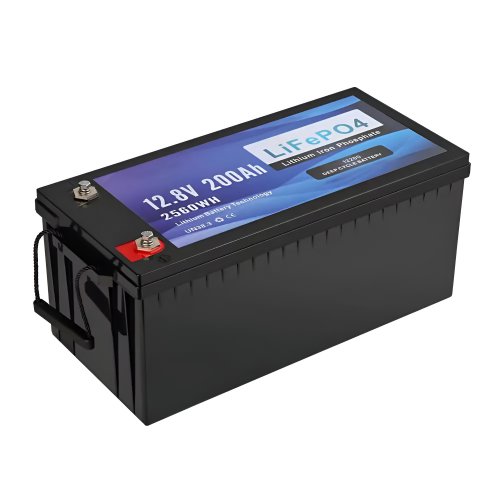
A LiFePO4 deep cycle battery is fundamentally designed to be repeatedly discharged and recharged, providing steady power over a long period. Unlike starter batteries that deliver a short, high-current burst, deep cycle batteries are built for endurance. The core features that enable this in a LiFePO4 battery are rooted in its chemistry.High Cycle Life: This is the standout feature. A quality LiFePO4 battery can typically withstand 2000 to 5000 full charge-discharge cycles while retaining 80% of its original capacity. This dwarfs the 300-500 cycles common with lead-acid batteries.Exceptional Depth of Discharge (DoD): LiFePO4 batteries can be safely discharged to 80-90% of their capacity regularly without incurring damage. In contrast, regularly discharging a lead-acid battery beyond 50% significantly shortens its life.Stable Voltage Output: One of the most noticeable functional benefits is the stable voltage. While lead-acid batteries see a steady voltage drop as they discharge (causing lights to dim and motors to slow), LiFePO4 batteries maintain a near-constant voltage for the vast majority of the discharge cycle, delivering full power until they are almost depleted.Rapid Charging: These batteries can accept a much higher charge current, often charging from empty to full in a fraction of the time required for a lead-acid battery, provided the charger can deliver the necessary amperage.Integrated Battery Management System (BMS): A crucial internal component, the BMS protects the battery from over-charging, over-discharging, short circuits, and extreme temperatures, ensuring safety and longevity.
The Advantages: Where LiFePO4 Truly Excels
In practical terms, the features above translate into compelling advantages that justify the higher initial investment for many users.
1. Unmatched Longevity and Value: The multi-thousand-cycle lifespan is arguably the most significant advantage. For an RVer who cycles a battery weekly, a lead-acid battery might last two years, while a LiFePO4 battery could easily last a decade or more. This makes the total cost of ownership often lower over the long term, despite the higher upfront price. 2. Effective Capacity and Light Weight: The ability to use almost the entire rated capacity is a game-changer. A 100Ah LiFePO4 battery effectively provides nearly 100Ah of usable energy, whereas a 100Ah lead-acid battery only safely provides about 50Ah. Furthermore, LiFePO4 batteries are approximately one-third the weight of their lead-acid counterparts with similar capacity, a critical factor for vehicles and boats where weight impacts fuel efficiency and performance. 3. Maintenance-Free and Efficient Operation: There is no need to check water levels or perform equalization charges. They can be installed in various orientations and have a very low self-discharge rate, meaning they hold their charge for months when not in use. Their high efficiency (typically over 95%) means more of the solar or charger energy is stored, with less lost as heat.
The Disadvantages: Considerations Before Purchasing
No technology is perfect, and LiFePO4 batteries have their own set of drawbacks that must be acknowledged.
1. Higher Initial Cost: The most immediate barrier is the purchase price. A LiFePO4 battery can cost two to three times more than a high-quality AGM battery of similar capacity. This requires a significant upfront investment. 2. Temperature Sensitivity (Charging): While LiFePO4 chemistry is very stable, it cannot be charged below freezing (0°C / 32°F) without risking permanent internal damage. Many modern batteries come with built-in low-temperature charge protection, but this is a critical operational limitation in cold climates that lead-acid batteries do not share to the same degree. 3. Requires a Compatible Charger: To fully utilize their potential and ensure safety, LiFePO4 batteries require a lithium-specific charger. Using an old lead-acid charger may not charge the battery fully and can, in some cases, be detrimental. This adds to the system cost if an upgrade is needed. 4. State of Charge (SoC) Meter Confusion: The incredibly flat voltage discharge curve makes it difficult to estimate the state of charge using voltage alone. A voltmeter that is reasonably accurate for lead-acid will be highly misleading for LiFePO4, showing "full" for most of the discharge and then dropping rapidly at the end. A dedicated battery monitor with a shunt is highly recommended for accurate readings.
Actual Use Experience
Deploying a 100Ah LiFePO4 battery in a camper van solar system provides a clear illustration of its performance. The first noticeable difference is the silence and consistency of power. With a lead-acid battery, the inverter would audibly strain and lights would dim as the battery level dropped. With the LiFePO4, the inverter fan maintains a constant speed, and LED lights burn at the same brightness from 100% down to 10% charge.
A typical day of use involves running a 12V fridge, LED lights, a water pump, and charging laptops and phones. Where a 100Ah AGM battery would be drained to its 50% limit by evening, the LiFePO4 battery often shows over 40% remaining capacity the next morning, providing a much larger and more reliable energy buffer. Recharging via solar is remarkably swift; the battery readily accepts high amperage from the panels, reaching full charge by midday, whereas the AGM would have lingered in the absorption stage for hours longer.
The peace of mind is another intangible benefit. There is no worry about damaging the battery by accidentally taking it down to a 20% state of charge. The knowledge that the BMS will intervene in case of a fault, coupled with the stability of the chemistry itself, eliminates the anxiety associated with battery management.
Conclusion
The deep cycle performance of LiFePO4 battery technology represents a significant leap forward. Its unparalleled cycle life, extensive usable capacity, and maintenance-free operation make it an objectively superior choice for serious deep cycle applications. The advantages are not merely incremental; they are transformative, enabling greater energy independence and reliability.
However, this performance comes at a cost. The high initial investment, sensitivity to cold-temperature charging, and the potential need for a new charger are genuine considerations. For a casual user with minimal power needs, these factors may tilt the balance towards a traditional AGM battery. But for anyone whose lifestyle or system depends on consistent, deep-cycle power—be it on a boat, in an RV, or in a home solar array—the long-term reliability, efficiency, and sheer usable power of a LiFePO4 battery make it a compelling and, for many, an ultimately indispensable investment.
Product Catalogs