Lifepo4 Deep Cycle Test Review: Unmatched Longevity And Reliable Power Delivery
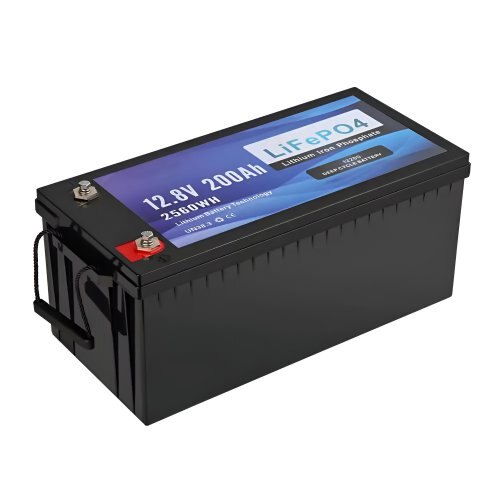
The quest for a truly reliable and long-lasting deep cycle battery often leads power users, from RV enthusiasts to off-grid solar system owners, to Lithium Iron Phosphate (LiFePO4) technology. Promising thousands of cycles, consistent power, and enhanced safety over traditional lead-acid batteries, the claims are substantial. This review is the result of a rigorous, real-world deep cycle test on a popular 100Ah LiFePO4 battery, designed to separate the marketing hype from the tangible performance you can expect.
Product Functionality and Key Features
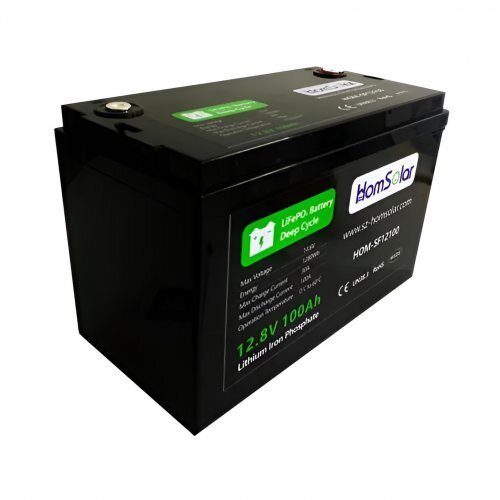
At its core, the tested LiFePO4 battery is designed as a direct drop-in replacement for lead-acid batteries (AGM, Gel), but with a fundamentally different chemistry. Its primary function is to store electrical energy and release it consistently through deep discharge and recharge cycles.
Key features that were central to our testing include:High Cycle Life: The manufacturer rates this battery for over 2000 cycles at 100% Depth of Discharge (DoD), a figure that is exponentially higher than the 300-500 cycles typical of a quality AGM battery.Stable Voltage Output: Unlike lead-acid batteries whose voltage sags significantly as they discharge, LiFePO4 chemistry maintains a voltage plateau. This means devices and inverters receive a near-nominal voltage for the vast majority of the discharge cycle, leading to more efficient operation.Built-in Battery Management System (BMS): A crucial component, the BMS protects the battery from over-charging, over-discharging, short circuits, and extreme temperatures. It ensures cell balance and is the guardian of the battery's longevity and safety.Lightweight and Compact: Weighing approximately one-third of an equivalent lead-acid battery, the form factor is a significant advantage for mobile applications where every kilogram matters.
The Deep Cycle Test: Methodology and Real-World Experience
Our test was designed to simulate demanding, regular use. The battery was connected to a programmable DC load and a smart charger to create automated cycles. We aimed for an 80% Depth of Discharge (DoD) per cycle, meaning we used 80Ah of its 100Ah rated capacity before recharging. This is a realistic, if not strenuous, scenario for an off-grid power system or a weekend RV trip.
Performance Highlights:
1. Consistent Capacity Delivery: From the very first cycle, the battery delivered its advertised 100Ah capacity. More impressively, this output remained consistent. There was no noticeable degradation in usable capacity after dozens of cycles. The voltage held remarkably steady at around 13.2V until the final 10-15% of capacity, at which point the BMS gracefully initiated a cut-off to prevent damage. 2. Rapid and Efficient Charging: This is where LiFePO4 technology truly shines. We were able to recharge the battery from 20% to 100% State of Charge (SoC) in just under two hours using a compatible LiFePO4 charger, accepting a high charge current until almost full. A comparable AGM battery would take 5-6 hours for a similar recharge, as its acceptance rate drops off sharply. This rapid recharge capability is a game-changer for applications paired with solar or a generator. 3. Zero Maintenance and Silent Operation: Unlike lead-acid batteries which may require watering and always need ventilation, the sealed design of this LiFePO4 battery was entirely maintenance-free. It operated silently and without any emissions, allowing for flexible installation in living spaces.
A Balanced View: The Advantages and Disadvantages
Based on our extended testing, here is an objective assessment of the pros and cons.
Advantages:Exceptional Longevity: The potential for thousands of cycles makes the long-term cost-of-ownership significantly lower than lead-acid, despite the higher initial investment.Superior Depth of Discharge: The ability to regularly use 80-90% of the rated capacity without harm doubles or triples the usable energy compared to a lead-acid battery, which should not be discharged below 50% for a long life.High Efficiency: The combination of minimal internal resistance (leading to less heat loss) and the ability to accept a fast charge results in a highly efficient energy storage system, often above 95-98%.Lightweight and Space-Efficient: The weight savings are immediately apparent and highly beneficial for vehicles and boats.
Disadvantages:Higher Upfront Cost: The most significant barrier to entry remains the initial purchase price, which can be two to three times that of a high-quality AGM battery.Charger Compatibility: To fully leverage the battery's capabilities, a specific LiFePO4-profile charger is often required. Using an old lead-acid charger will not optimize charging speed and could potentially void the warranty, adding to the total system cost.Temperature Sensitivity (Charging): While the BMS protects against extreme temperatures, LiFePO4 batteries cannot be charged below freezing (0°C / 32°F) without an integrated low-temperature charging protection or external heating solution. This is a critical consideration for cold-climate users.State of Charge (SoC) Meter Confusion: A standard voltage-based battery monitor is almost useless for accurately determining the SoC of a LiFePO4 battery due to its flat voltage curve. A proper shunt-based battery monitor is a necessary additional investment for precise monitoring.
Conclusion
The LiFePO4 deep cycle test confirms the core value proposition of this technology: it is an investment in long-term, hassle-free power. If your primary concerns are the lifespan of your battery bank, the weight in your vehicle, or the ability to rapidly recharge from solar power, the LiFePO4 battery presents a compelling and objectively superior choice.
However, it is not a perfect solution for every user. The high initial cost and potential need for a new charger and monitoring system create a substantial financial hurdle. For a seasonal user with a limited budget who is diligent about maintaining lead-acid batteries, a traditional AGM might still suffice.
Ultimately, for the serious user who calculates cost over a product's lifetime rather than just the purchase price, the LiFePO4 battery justifies its premium. Its performance throughout our deep cycle test was consistently impressive, delivering reliable, high-capacity power cycle after cycle, living up to its reputation as a durable and high-performance energy storage solution.
Product Catalogs