Lifepo4 Energy Density Review: Unpacking The Trade-offs For Longevity And Safety
The quest for the ideal battery technology is a constant balancing act. On one side, we have the relentless pursuit of higher energy density, promising longer runtimes in smaller packages. On the other, the critical demands of safety, cycle life, and stability. Enter Lithium Iron Phosphate, or LiFePO4, a battery chemistry that has surged in popularity, particularly in the solar energy, marine, and off-grid power sectors. This review will delve into the core of what makes LiFePO4 a compelling choice, with a specific focus on its most debated characteristic: energy density. We will dissect its functionality, weigh its pronounced advantages against its distinct limitations, and contextualize its performance in real-world scenarios.
Product Functionality and Core Technology
At its heart, a LiFePO4 battery is a type of lithium-ion battery, but its cathode material is composed of lithium iron phosphate, unlike the more common lithium cobalt oxide (LiCoO2) found in smartphones and laptops. This fundamental chemical difference is the source of its unique property profile.
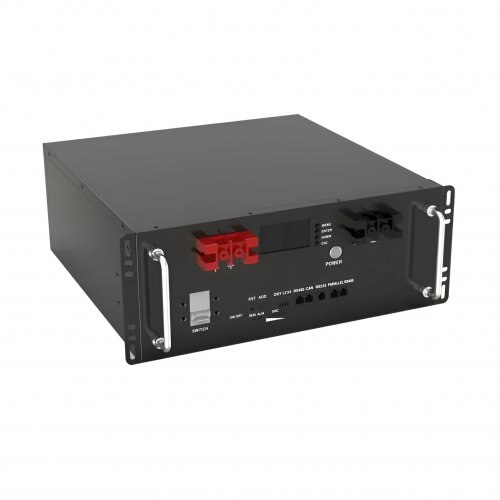
The primary function of any battery is to store and deliver electrical energy. LiFePO4 cells excel at providing stable voltage and high continuous discharge currents, making them suitable for applications requiring substantial power, such as powering electric trolling motors, solar storage systems, or backup power units. They are inherently designed for deep-cycle applications, meaning they can be regularly discharged and recharged to a significant portion of their capacity without suffering rapid degradation. Modern LiFePO4 batteries are often sold as smart batteries, integrating a Battery Management System (BMS) that protects them from over-charge, over-discharge, short circuits, and extreme temperatures, further enhancing their reliability and user-friendliness.
The Advantages: Where LiFePO4 Truly Shines
The benefits of LiFePO4 chemistry are substantial and form the cornerstone of its value proposition.
1. Exceptional Cycle Life: This is arguably LiFePO4's most significant advantage. Where a typical lead-acid battery might offer 300-500 full cycles before significant capacity loss, LiFePO4 batteries routinely deliver 3,000 to 5,000 cycles, with some premium models rated for even more. This translates to a service life of a decade or more, drastically reducing the long-term cost of ownership. 2. Superior Safety Profile: Safety is a non-negotiable feature. The phosphate-based cathode is intrinsically more stable than other lithium-ion chemistries. It is far more resistant to thermal runaway, a chain reaction that can lead to fire or explosion, especially under conditions of overcharging, physical damage, or short-circuiting. This makes LiFePO4 a preferred choice for installations inside homes, vehicles, and boats. 3. Stable Performance: LiFePO4 batteries maintain a remarkably consistent voltage throughout their discharge cycle. This means a device powered by LiFePO4 will operate at near-peak performance until the battery is almost entirely depleted, unlike lead-acid batteries which see a steady voltage sag. 4. Fast Charging Capability: These batteries can accept a much higher charge current relative to their capacity compared to lead-acid. What might take 8 hours to charge a deep-cycle AGM battery could be accomplished in 2-3 hours with a LiFePO4 battery, assuming an appropriately sized charger. 5. Lightweight and Maintenance-Free: While not as light as some high-energy-density lithium polymers, LiFePO4 is significantly lighter than lead-acid batteries for the same usable capacity. Furthermore, they require no periodic watering or equalization charges.
The Disadvantages: The Energy Density Compromise
No technology is perfect, and LiFePO4's strengths come with a clear and understandable trade-off.
1. Lower Volumetric and Gravimetric Energy Density: This is the central point of discussion. LiFePO4 has a lower energy density than other prominent lithium-ion chemistries like NMC (Lithium Nickel Manganese Cobalt Oxide). In practical terms, for a given physical size or weight, a LiFePO4 battery will store less energy than an NMC battery. This makes it less ideal for applications where minimizing space and weight is the absolute highest priority, such as in high-end electric vehicles striving for maximum range or ultra-portable consumer electronics. 2. Higher Initial Cost: The upfront cost of a LiFePO4 battery is higher than that of a lead-acid battery with a similar nominal capacity. While the cost-per-cycle over its lifetime is often lower, the initial investment can be a barrier. 3. Performance in Sub-Zero Temperatures: While LiFePO4 batteries operate well across a wide temperature range, they generally cannot bechargedat temperatures below freezing (0°C / 32°F) without causing permanent damage to the cells. Many modern BMS units include low-temperature charge protection, but this is a crucial operational consideration for users in cold climates.
Real-World Usage Experience
Context is everything. In application, the "limitation" of energy density often becomes a secondary concern.
For a solar power setup on a camper van, a 100Ah LiFePO4 battery provides significantly moreusableenergy than a 100Ah lead-acid battery, which should not be discharged beyond 50%. Despite its slightly larger size than a comparable NMC battery, its unparalleled safety makes it the only responsible choice for installation inside a living space. The peace of mind knowing the battery is stable and long-lasting far outweighs the minor space savings of a higher-energy-density, but less safe, alternative.
For a marine application powering electronics and a trolling motor on a boat, the weight savings over lead-acid is transformative, improving fuel efficiency and handling. The ability to discharge it completely without harm means longer time on the water. The energy density is perfectly adequate for the purpose, and the safety aspect near water and in a potentially harsh environment is paramount.
However, for a long-range electric vehicle, where every kilogram and cubic centimeter counts towards extending the driving range, automakers often prioritize the higher energy density of NMC chemistries. The trade-off in cycle life and safety is managed through sophisticated battery management and cooling systems. In this specific context, LiFePO4's lower energy density is a genuine handicap.
Conclusion: A Targeted Power Solution
The LiFePO4 battery is not a one-size-fits-all solution, nor does it claim to be. Its review cannot be summarized with a simple score but rather with a clear understanding of its design philosophy. It is a battery engineered for endurance, safety, and reliability over raw, compact energy storage.
Its lower energy density is the deliberate and justified compromise for achieving its world-class cycle life and legendary safety. For anyone building a home energy storage system, outfitting an RV, or powering a marine vessel, the LiFePO4 battery is frequently the superior choice. It represents a mature, robust, and trustworthy technology where the value is measured not in watt-hours per liter for a single charge, but in thousands of safe, dependable cycles over many years of service. It is the workhorse of the lithium-ion world, and its performance, when matched to the right application, is nothing short of exceptional.
Product Catalogs