Lifepo4 User Experience Review: Unpacking The Real-world Pros And Cons
The quest for reliable and efficient energy storage has led many consumers and professionals to Lithium Iron Phosphate (LiFePO4) batteries. Touted as a superior alternative to traditional lead-acid and other lithium-ion chemistries, these batteries are becoming the go-to choice for applications ranging from recreational vehicles and marine use to solar power storage and backup systems. This review delves into the real-world user experience with LiFePO4 technology, moving beyond the datasheet to explore its actual performance, benefits, and drawbacks.
Core Functionality and Key Features
At its heart, a LiFePO4 battery performs the same fundamental function as any other battery: storing and discharging electrical energy. However, its internal chemistry based on lithium iron phosphate sets it apart. For the user, this translates into several distinct features:High Cycle Life: The most celebrated feature is its longevity. LiFePO4 batteries can typically withstand 2000 to 5000 full charge-discharge cycles while retaining 80% of their original capacity. In practice, this means a battery can last for a decade or more with daily use, far outliving the 300-500 cycles of a typical lead-acid battery.Stable Voltage Output: Unlike lead-acid batteries whose voltage sags significantly as they discharge, LiFePO4 batteries maintain a remarkably stable voltage for the vast majority of their discharge cycle. This "flat voltage curve" means devices and motors run more efficiently and consistently until the battery is nearly empty.Built-in Battery Management System (BMS): Almost every consumer-grade LiFePO4 battery comes with an integrated BMS. This electronic brain is crucial for safety and longevity, providing protection against over-charging, over-discharging, short circuits, and excessive current draw. It also helps in balancing the individual cells within the battery pack.Fast Charging Capability: LiFePO4 batteries can accept a much higher charge current than lead-acid batteries. Where a lead-acid might need 5-8 hours for a full charge, a LiFePO4 can often be charged to 100% in 1-2 hours with an appropriate charger, significantly reducing downtime.Lightweight and Compact: They offer a significantly higher energy density than lead-acid. A 100Ah LiFePO4 battery is roughly one-third the weight and half the size of its lead-acid counterpart, a critical factor for mobile applications like vans and boats where every kilogram matters.
The User Experience: A Deep Dive
Living with a LiFePO4 battery reveals why users who make the switch rarely look back.
From the moment of installation, the weight saving is immediately appreciable. Mounting a 100Ah battery single-handedly is entirely feasible, simplifying the setup process in cramped electrical compartments. The peace of mind provided by the BMS cannot be overstated. Users can leave their systems on a solar charger indefinitely or use high-draw appliances without the constant fear of accidentally damaging the battery through a simple mistake. This "set-and-forget" aspect is a significant quality-of-life improvement.
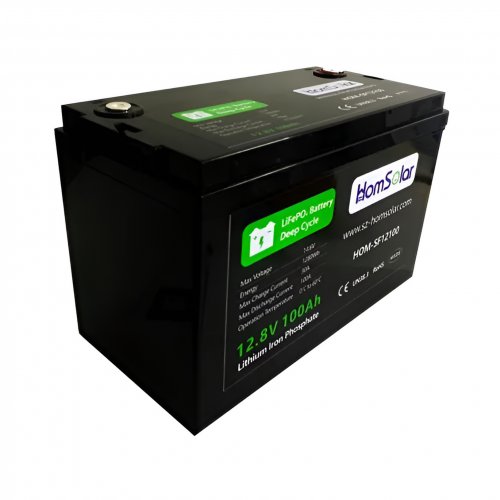
In daily use, the stable voltage is the most noticeable performance benefit. For an RV user, this means the lights don't dim as the night progresses. The water pump maintains consistent pressure, and the inverter powering a laptop or television doesn't shut down prematurely due to voltage sag. The battery delivers its rated capacity consistently, unlike lead-acid batteries which lose effective capacity at higher discharge rates. If you have a 100Ah LiFePO4 battery, you can realistically access close to 100Ah of power (down to the BMS cutoff), compared to maybe 50Ah from a lead-acid battery to avoid damaging it.
The fast charging is a game-changer for off-grid living or touring. A few hours of good sunlight on solar panels can fully replenish the battery, whereas a lead-acid bank might still be languishing in the absorption charging stage. This ensures that the system is ready to go for the evening, even after a day of heavy use.
A Balanced View: The Shortcomings and Considerations
Despite the overwhelming advantages, the LiFePO4 user experience is not without its challenges and compromises.Higher Upfront Cost: This is the single biggest barrier to entry. A LiFePO4 battery can cost two to three times more than a similar capacity lead-acid battery. However, the long-term cost-per-cycle analysis almost always favors LiFePO4, making it a value proposition centered on longevity and performance rather than initial savings.Sensitivity to Cold Weather Charging: While LiFePO4 batteries perform well in a wide temperature range fordischarging, they cannot be charged at temperatures below 0°C (32°F). Attempting to do so can cause permanent, irreversible damage to the plates. This necessitates batteries with low-temperature charge disconnect protection (a feature of most good BMS units) or the use of external heating pads in frigid climates, adding complexity and cost.State of Charge (SoC) Measurement Quirks: The incredibly flat voltage curve that is a benefit during discharge makes it difficult to estimate the state of charge based on voltage alone. A battery at 50% and 80% charge may show almost identical voltages. This makes reliance on a battery monitor that uses a shunt to track amp-hours in and out (coulomb counting) essential for accurate SoC reading, which is an additional component and expense if not included in the system.Compatibility with Existing Equipment: While generally compatible, some older chargers or inverters designed specifically for lead-acid battery profiles (particularly the long absorption and float charge stages) may not be ideal for LiFePO4. Users often need to ensure their charging sources can be programmed for a LiFePO4 voltage profile (typically around 14.2-14.6V for bulk/absorption and 13.2-13.6V for float) to maximize battery life.
Conclusion
The LiFePO4 user experience is largely defined by a transition from constant maintenance and management to a more reliable, high-performance relationship with energy storage. The initial financial outlay is substantial, but it is amortized over years of faithful service, consistent power delivery, and unparalleled depth of discharge.
For users whose priorities are longevity, weight savings, safety, and maximum usable capacity, LiFePO4 technology represents a clear and compelling upgrade. The drawbacks, primarily concerning cold-weather charging and the need for potential peripheral upgrades, are manageable but must be factored into the decision. Ultimately, adopting LiFePO4 is an investment not just in a battery, but in a simpler, more powerful, and more dependable energy ecosystem.
Product Catalogs