Advances In Thermal Stability: From Molecular Engineering To High-tech Applications
The pursuit of materials and systems capable of withstanding extreme temperatures remains a cornerstone of modern science and engineering. Thermal stability—the ability of a substance to resist decomposition, phase change, or significant property degradation under high thermal stress—is a critical parameter dictating the performance, safety, and longevity of technologies ranging from aerospace propulsion to microelectronics and energy storage. Recent years have witnessed remarkable progress in this field, driven by a synergistic blend of nanoscale engineering, computational discovery, and innovative material design.
Molecular and Nanoscale Engineering: The First Line of Defense
At the most fundamental level, thermal stability is governed by atomic bonding and molecular structure. A significant breakthrough has been the development and refinement of high-entropy materials, particularly high-entropy alloys (HEAs) and ceramics (HECs). The "configurational entropy" stabilization effect, where a single-phase solid solution is formed from multiple principal elements in near-equimolar ratios, impedes atomic diffusion and phase separation at elevated temperatures. For instance, refractory HEAs based on elements like Mo, Nb, Ta, W, and V have demonstrated exceptional strength retention at temperatures exceeding 1600°C, far surpassing the limits of conventional nickel-based superalloys (Miracle & Senkov, 2017). Similarly, HECs such as (Hf-Zr-Ta-Nb-Ti)C have set new benchmarks for ultra-high temperature ceramics, maintaining structural integrity close to 4000°C.
Parallel to this, the field of organic electronics has been revolutionized by enhancing the thermal stability of perovskite solar cells (PSCs). The intrinsic instability of hybrid organic-inorganic perovskites like MAPbI₃ has been a major bottleneck. Recent strategies focus on molecular engineering to suppress volatile component loss. The introduction of low-dimensional perovskites, where bulky organic cations form a protective shell around the inorganic slabs, has significantly improved thermal resilience. Furthermore, the use of mixed cations (e.g., formamidinium, cesium) and halides, along with advanced passivation techniques using molecules like phenethylammonium iodide, has enabled PSCs to pass stringent international standard thermal stability tests (e.g., ISOS-T-3), enduring 1000 hours at 85°C with minimal efficiency loss (Wang et al., 2020).
Computational and AI-Driven Material Discovery
The traditional trial-and-error approach to discovering thermally stable materials is being rapidly supplanted by computational methods. High-throughput density functional theory (DFT) calculations allow researchers to screen thousands of candidate compounds for key properties like formation energy, decomposition pathway, and melting point. More recently, machine learning (ML) models trained on vast material databases have emerged as a powerful predictive tool. These models can identify complex, non-linear relationships between elemental composition, crystal structure, and thermal properties, guiding the synthesis of novel materials with tailored stability.
For example, ML algorithms have been instrumental in predicting stable compositions in multi-component oxide systems for thermal barrier coatings (TBCs). By learning from existing data on coefficients of thermal expansion, thermal conductivity, and phase stability, these models can propose new ceramic compositions, such as novel pyrochlore or defect-cluster oxides, that are predicted to resist sintering and phase transformation under the harsh thermal cycling conditions of a gas turbine engine. This accelerates the design cycle from years to months, marking a paradigm shift in materials development (Lookman et al., 2017).
Technological Breakthroughs in High-Temperature Systems
These material-level advances are directly translating into technological breakthroughs. In the realm of aerospace, next-generation TBCs based on gadolinium zirconate (Gd₂Zr₂O₇) with a layered or columnar microstructure are being deployed. These coatings offer lower thermal conductivity and superior resistance to calcium-magnesium-alumino-silicate (CMAS) infiltration compared to traditional yttria-stabilized zirconia, thereby extending the service life of turbine blades.
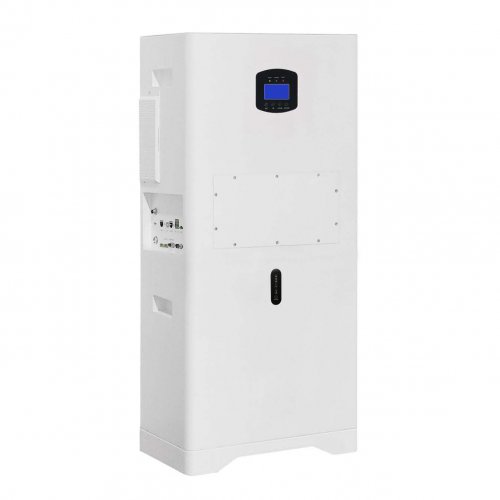
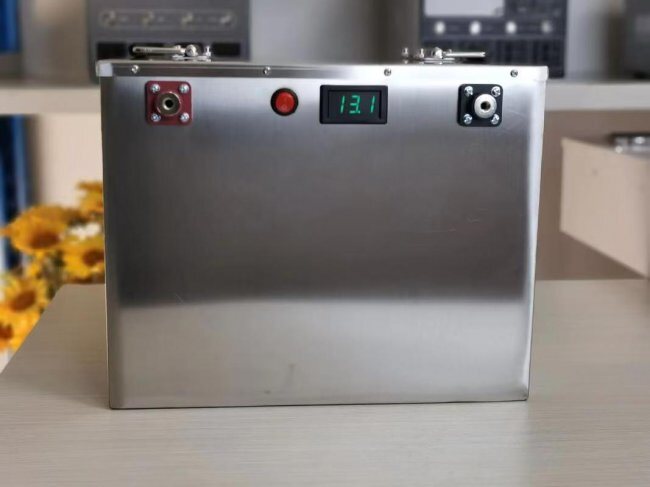
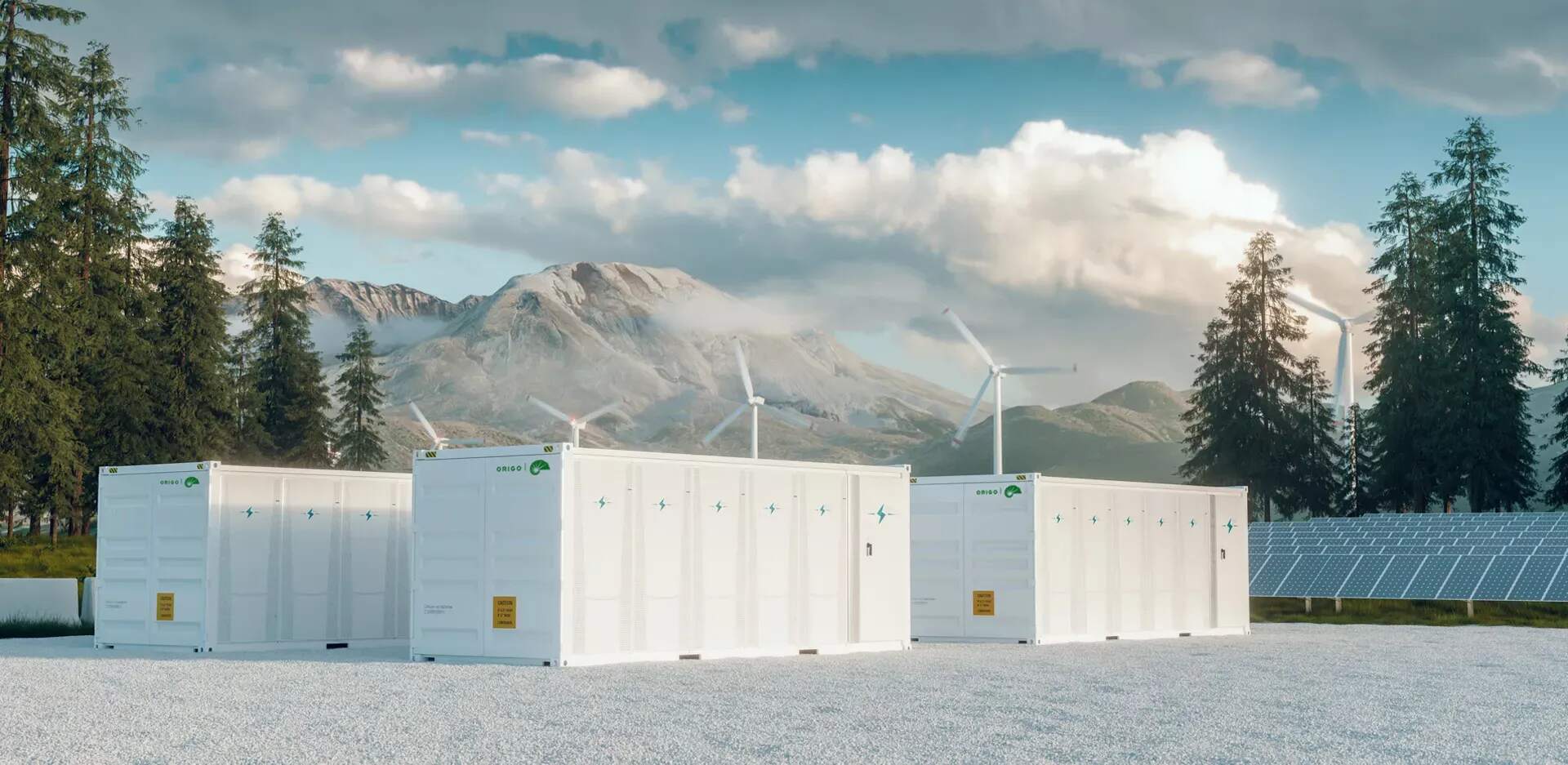
In energy storage, the thermal stability of lithium-ion batteries is a paramount safety concern. The development of solid-state batteries (SSBs) represents a quantum leap. By replacing the flammable liquid electrolyte with a thermally robust solid-state electrolyte (SSE)—such as sulfide-based (e.g., Li₁₀GeP₂S₁₂) or oxide-based (e.g., LLZO) ceramics—the risk of thermal runaway is drastically reduced. Recent research has focused on stabilizing the interface between the SSE and the high-capacity cathode (e.g., NMC811), using thin-film coatings of lithium niobate or other thermally stable materials to suppress interfacial reactions that can propagate at high temperatures (Manthiram et al., 2017).
Furthermore, additive manufacturing (3D printing) of high-temperature materials is opening new frontiers. Techniques like selective laser melting (SLM) and electron beam melting (EBM) are now being used to fabricate complex, lightweight components from nickel superalloys and refractory HEAs with intricate internal cooling channels, which were previously impossible to manufacture. This allows for more efficient thermal management in extreme environments.
Future Outlook and Challenges
The future of thermal stability research is poised at the intersection of several exciting frontiers. One key direction is the development ofadaptiveorself-healingthermal protection systems. Inspired by biological systems, materials that can autonomously seal cracks or regenerate a protective surface layer upon exposure to extreme heat are under active investigation. For instance, incorporating microcapsules filled with a healing agent into a ceramic matrix composite could provide a self-repairing mechanism for TBCs.
Another promising area is the exploration of 2D materials beyond graphene. Materials like hexagonal boron nitride (h-BN) and MXenes exhibit exceptional thermal stability and anisotropic thermal conductivity. Engineering van der Waals heterostructures by stacking different 2D layers could enable the creation of devices with unparalleled thermal management capabilities for next-generation nanoelectronics.
The integration ofin-situandoperandocharacterization techniques will also be crucial. Using synchrotron X-ray diffraction, transmission electron microscopy, and spectroscopy to observe material degradation and phase transitions in real-time under thermal load will provide unprecedented insights into failure mechanisms, enabling more rational design.
However, significant challenges remain. Scaling up the synthesis of novel materials like HEAs and HECs cost-effectively is a major hurdle. The long-term stability and recyclability of these advanced materials, especially in complex multi-material systems, need thorough investigation. Furthermore, understanding and mitigating degradation at interfaces, which are often the weak link in any high-temperature system, will require continued multi-scale modeling and experimental effort.
In conclusion, the field of thermal stability is undergoing a profound transformation. Through sophisticated molecular design, the power of artificial intelligence, and innovative manufacturing, we are steadily pushing the thermal limits of materials. As these advances mature, they will undoubtedly unlock new possibilities in sustainable energy, hypersonic travel, and advanced computing, forging a future where technology can reliably operate in the most demanding thermal environments imaginable.
Product Catalogs