Cathode Material News: Innovations And Supply Chain Dynamics Reshape The Battery Industry
The global push towards electrification, driven by the automotive and energy storage sectors, has placed cathode materials squarely under the spotlight. As the primary determinant of a battery's energy density, cost, lifespan, and safety, advancements in cathode chemistry are critical for the next generation of energy storage solutions. The industry is currently navigating a complex landscape defined by material innovation, intense geopolitical competition, and evolving supply chain strategies.
Latest Industry Developments: Beyond NMC Dominance
The lithium-ion battery market has long been dominated by the triumvirate of cathode chemistries: Lithium Nickel Manganese Cobalt Oxide (NMC), Lithium Iron Phosphate (LFP), and Lithium Cobalt Oxide (LCO). Recent developments, however, signal a significant shift in their respective market shares and technological focus.
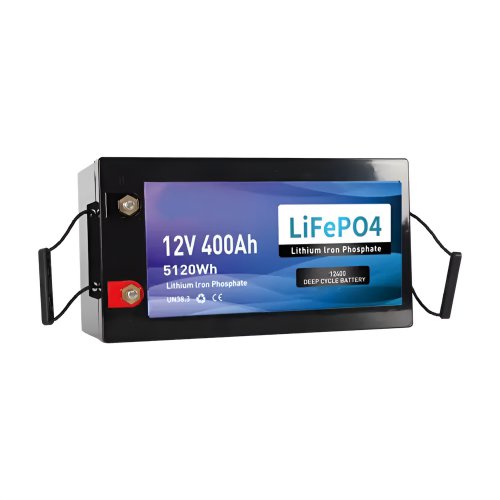
The most notable trend is the rapid ascendance of LFP. Once considered a technology for lower-range applications, LFP has seen a dramatic resurgence, particularly outside of China. Major automakers, including Tesla, Ford, and Volkswagen, are increasingly adopting LFP batteries for their standard-range vehicles. This shift is primarily driven by LFP's compelling advantages: superior safety due to its stable olivine structure, a longer cycle life, and the elimination of cobalt—a metal fraught with supply chain ethical concerns and price volatility. Recent manufacturing innovations have also closed the gap in the energy density of LFP cells, making them competitive for a broader range of electric vehicles (EVs).
Concurrently, the evolution of high-nickel NMC cathodes (such as NMC 811 and beyond) continues. The primary goal is to further increase nickel content to boost energy density, thereby extending the driving range of premium EVs. However, this pursuit is tempered by significant technical challenges. "Increasing nickel content often comes at the cost of structural stability and thermal resilience," notes Dr. Elena Rodriguez, a materials scientist at the Argonne Collaborative Center for Energy Storage Science. "The industry is heavily investing in single-crystal cathode morphologies and novel coating technologies to mitigate these degradation pathways and ensure the safety of high-energy-density cells."
Beyond these established paths, the sodium-ion (Na-ion) battery is emerging from the research lab into early commercialization. Companies like CATL and Northvolt have announced ambitious plans for Na-ion production. While their energy density currently lags behind that of lithium-ion, Na-ion technology offers a compelling value proposition for stationary storage and low-speed EVs, owing to the abundance and low cost of sodium. Its development is intrinsically linked to cathode innovation, with layered oxides and Prussian blue analogues being the leading candidate materials.
Trend Analysis: Supply Chain Localization and Sustainable Sourcing
The geopolitical dimension of cathode material supply is becoming a central theme in industry strategy. The concentration of refining and processing capacity for key minerals like lithium, cobalt, and nickel in specific regions, particularly China, has prompted policy responses aimed at building resilient and localized supply chains.
Legislation such as the U.S. Inflation Reduction Act (IRA) is directly influencing cathode production geography. The Act's incentives for EVs with battery components and critical minerals sourced from the U.S. or its free-trade partners are accelerating investment in domestic cathode material plants. Similar initiatives are underway in Europe under the Critical Raw Materials Act. This trend towards regionalization is leading to a reconfiguration of the global battery value chain, with new partnerships forming between Western automakers and mining companies.
Sustainability is another powerful trend shaping the cathode market. The environmental and social footprint of mining, particularly for cobalt, remains a significant concern for consumers and investors. In response, the industry is pursuing two parallel strategies. First, there is a strong push for chemistries that reduce or eliminate cobalt, as seen in the rise of LFP and high-nickel NMC. Second, robust systems for battery recycling are being developed. "Recycling is no longer just an end-of-life consideration; it is becoming an integral part of the raw material supply chain," states Michael Chen, an analyst at Wood Mackenzie. "Advanced hydrometallurgical processes can now recover over 95% of critical metals from spent batteries, providing a secondary, domestic source of cathode materials and reducing the reliance on virgin mining."
Expert Perspectives on the Future Cathode
Looking ahead, experts are focused on several promising avenues that could define the next decade of cathode development.
The solid-state battery is often hailed as the "holy grail," and its success is deeply intertwined with cathode innovation. A solid electrolyte enables the use of next-generation cathode materials, including high-voltage lithium nickel manganese (LNMO) spinel and even sulfur-based cathodes, which could offer step-change improvements in energy density and safety. However, the path to commercialization remains challenging. "The interface between the solid electrolyte and the cathode particle is a critical area of research," explains Dr. Rodriguez. "Overcoming impedance and degradation at this interface is the key to unlocking the full potential of solid-state technology."
Another area of intense research is the exploration of disordered rock salt (DRX) cathodes and other manganese-rich formulations. These materials promise to utilize more abundant and cheaper metals while delivering high energy density. While still in the R&D phase, progress in DRX cathodes is being closely watched as a potential game-changer for the long term.
Furthermore, the role of artificial intelligence and high-throughput computing is growing. These tools are being used to screen thousands of potential new cathode compositions in silico, dramatically accelerating the discovery and optimization process. "We are moving from a era of Edisonian trial-and-error to a data-driven, predictive approach to materials science," says Chen. "This will significantly shorten the development cycle for new cathode chemistries that are both high-performing and commercially viable."
In conclusion, the cathode material sector is in a state of dynamic flux. The competition between LFP and advanced NMC chemistries is intensifying, while nascent technologies like sodium-ion and solid-state are beginning to carve out their niches. Underpinning all these technical developments are the powerful, parallel forces of supply chain regionalization and the imperative for sustainable, circular life cycles. The decisions made and innovations achieved in cathode development today will fundamentally shape the performance, cost, and accessibility of the clean energy technologies of tomorrow.
Product Catalogs