Cycle Life News: Advancements And Challenges In Battery Longevity Reshape Industries
The term "cycle life" – the number of complete charge and discharge cycles a battery can undergo before its capacity falls below a specified percentage of its original value – has moved from an engineering specification sheet to a central pillar of strategic planning across multiple global industries. Recent developments in electric vehicles (EVs), grid-scale energy storage, and consumer electronics are underscoring a critical market shift: raw energy capacity is no longer the sole king; longevity and reliability over thousands of cycles are becoming equally paramount. This focus is driving innovation in material science, refining manufacturing processes, and forcing a crucial conversation about sustainability and total cost of ownership.
Latest Industry Dynamics: Beyond the Laboratory and into the Market
The most significant recent dynamic is the rapid commercialization of silicon-dominant anodes and semi-solid-state batteries. For years, the graphite anode has been the standard, but its limitations in energy density and charge rates have been a bottleneck. Companies like Sila Nanotechnologies and Group14 Technologies are now scaling production of silicon-based anode materials that significantly increase energy density. Crucially, their latest iterations claim to have overcome the historical weakness of silicon: its massive expansion and contraction during cycling, which previously led to rapid degradation. Sila recently announced its Titan Silicon™ anode is being used in a consumer wearable, boasting a 20% increase in energy density while maintaining a cycle life comparable to top-tier graphite cells. This marks a pivotal step from prototype to product.
Simultaneously, the first wave of semi-solid-state batteries is entering the market. Companies like SES AI and NIO, in partnership with WeLion, have begun initial deployment. While full solid-state batteries with metallic lithium anodes remain a future prospect, these semi-solid-state variants use a condensed electrolyte and advanced cell design to improve safety and energy density. Early data from these deployments is being closely watched, as the industry seeks real-world validation of their promised superior cycle life under high-voltage operation.
In the EV sector, the dynamic is shifting towards "million-mile batteries." Major automakers, including Tesla, GM, and Ford, are now designing battery packs and chemistries intended to last the lifetime of the vehicle – and beyond. CATL, the world's largest battery manufacturer, has publicly discussed its lithium iron phosphate (LFP) and nickel-manganese-cobalt (NMC) packs designed for 1.5 million kilometers and 16 years of service. This is not merely a technical achievement; it has profound implications for the second-life battery market and the overall residual value of electric vehicles.
Trend Analysis: The Convergence of Data, Manufacturing, and Second Life
Several key trends are emerging from the focus on cycle life:
1. The Rise of the Digital Twin: Battery management is evolving from simple voltage monitoring to sophisticated predictive analytics. Companies like ACCURE and TWAICE are offering AI-powered software that creates a "digital twin" of a physical battery. By analyzing operational data in real-time, these platforms can predict end-of-life and potential failures with increasing accuracy. This allows for optimized charging strategies tailored to prolong cycle life, transforming how fleet operators and grid storage managers maximize their assets' longevity and value.
2. Manufacturing Precision as a Differentiator: The industry is realizing that superior cycle life is not just about chemistry, but also about consistency in manufacturing. Defects like microscopic impurities, electrode misalignments, or uneven coating are primary culprits in premature cell failure. Consequently, there is a massive investment in machine learning and computer vision for quality control. Tesla's "Tabless" electrode design and dry battery electrode process, though challenging to scale, are examples of manufacturing innovations aimed directly at reducing points of failure and enhancing the cycle life of each cell produced.
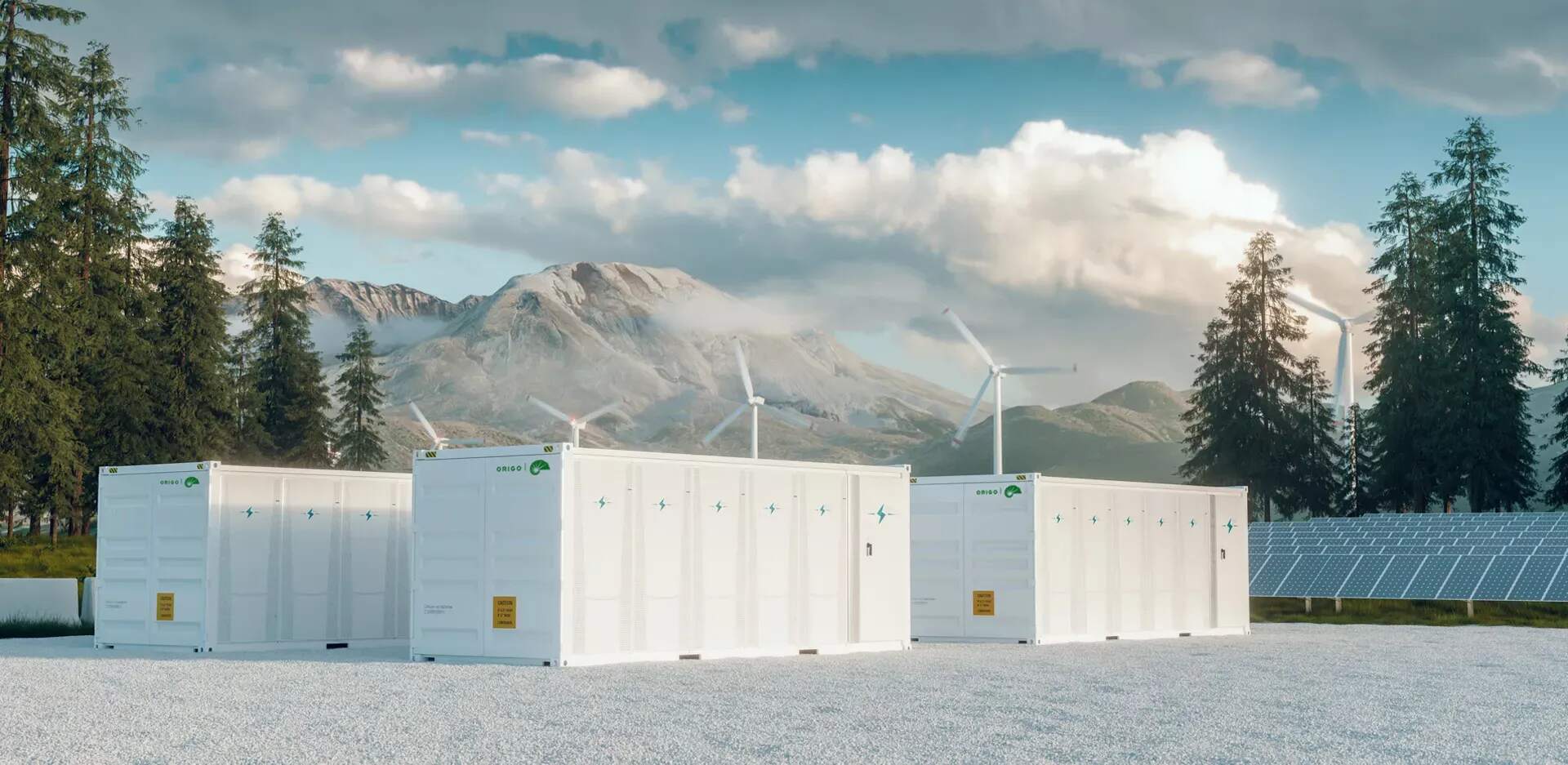
3. The Second-Life Ecosystem Matures: As the first generation of EV batteries ages, a robust market for their repurposing is taking shape. A battery that has degraded to 70-80% of its original capacity may no longer be suitable for an EV but remains perfectly viable for less demanding applications like stationary energy storage for solar farms or backup power. This trend directly links cycle life in a vehicle to a battery's total economic and environmental value. Companies like B2U Storage Solutions are already operating large-scale storage facilities using second-life EV packs, proving the commercial viability of a circular economy for batteries, all predicated on a long and well-understood first life.
Expert Perspectives: Cautious Optimism and Focused Concerns
Industry experts largely agree on the direction of travel but highlight specific challenges.
Dr. Elena Varela, a Senior Research Fellow at the Institute for Electrochemical Energy Storage, states, "The progress in anode materials, particularly silicon composites, is genuinely exciting. We are seeing real solutions to the mechanical stress problem. However, the cathode side remains a critical frontier. High-nickel NMC cathodes offer great energy density but can be more prone to cracking and parasitic reactions with the electrolyte over long-term cycling. The stability of the cathode-electrolyte interface is now the next major battlefield for cycle life extension."
From a commercial perspective, Mark Davies, a battery analyst at GreenTech Capital, emphasizes the economic calculus. "The industry is in a delicate balancing act. Automakers are under immense cost pressure. Implementing every cycle-life-extending technology, from advanced additives to precision manufacturing, adds cost. The challenge is to demonstrate a clear return on investment through longer warranties, higher resale values, and reduced liability. The data from digital twin companies will be crucial in quantifying that ROI for buyers."
Finally, Sarah Chen, CEO of a second-life battery startup ReCircle Energy, offers a downstream view. "For our business model to succeed, we don't just need long cycle life; we need predictable and consistent degradation. A battery that fails suddenly is worthless to us. We need packs that age gracefully. This puts the onus on cell makers and OEMs to design not just for initial performance, but for predictable aging patterns, which is a much more complex engineering challenge."
In conclusion, the focus on cycle life is maturing the energy storage industry. It is no longer a race for the highest watt-hour per kilogram alone, but a comprehensive effort to build more resilient, durable, and valuable energy storage solutions. The interplay between new chemistries, data-driven management, and circular economic models is setting a new standard, where the true measure of a battery's worth is increasingly defined by the length and reliability of its service life.
Product Catalogs