Lifepo4 Low Temperature Performance Review: Unlocking Reliable Power In The Cold
For users in cold climates, from off-grid adventurers to northern homeowners relying on solar storage, the performance of a battery at sub-zero temperatures is not a minor feature—it is a critical determinant of its viability. Traditional lithium-ion chemistries often falter in the cold, suffering from drastically reduced capacity and the risk of permanent damage during charging. This review focuses on the low-temperature capabilities of a modern LiFePO4 (Lithium Iron Phosphate) battery, specifically examining its real-world function, strengths, and limitations when the mercury drops.
Product Function and Core Technology
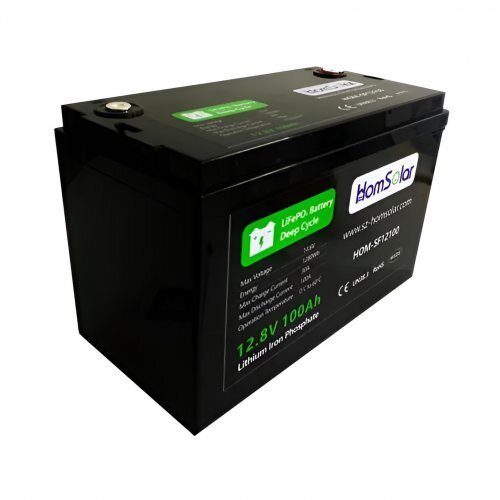
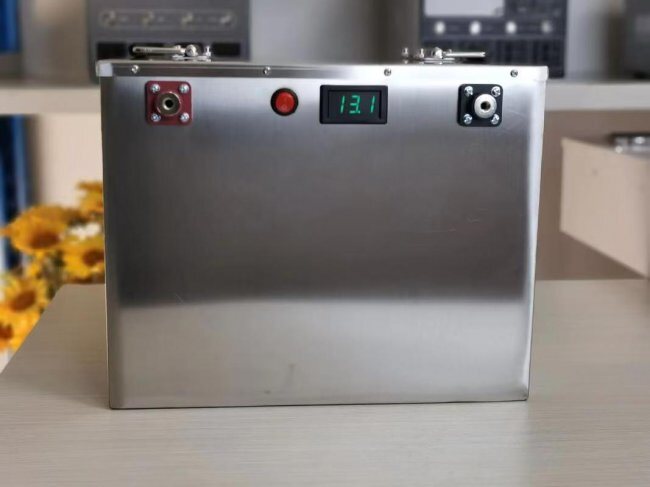
The product under evaluation is a standard 12V 100Ah LiFePO4 deep-cycle battery, a common form factor used in RVs, marine applications, and solar power systems. Its primary function is to store and deliver electrical energy efficiently and safely. What sets it apart in a cold context is its built-in Battery Management System (BMS) with dedicated low-temperature protection.
The core challenge with any lithium-based battery in the cold is the internal chemistry. As temperatures fall, the electrolyte becomes more viscous and the lithium ions move more sluggishly. This increased internal resistance leads to a reduction in available capacity and, more critically, makes charging hazardous. Attempting to charge a lithium battery below freezing without proper safeguards can cause lithium plating on the anode, which irreversibly degrades the battery and can create a safety risk.
The key technological feature of this LiFePO4 battery is its BMS, which actively monitors the internal cell temperature. If the BMS detects that the core temperature is below a specified threshold (typically between 0°C to 5°C / 32°F to 41°F), it will automatically disconnect the charging circuit. It is crucial to understand that the BMS preventscharging, but it still allowsdischargingat much lower temperatures, often as low as -20°C (-4°F). This design philosophy prioritizes safety while still permitting the use of stored energy in frigid conditions.
Advantages: The Cold-Weather Strengths
1. Superior Low-Temperature Discharge Performance: Compared to other lithium chemistries like NMC (Nickel Manganese Cobalt), LiFePO4 inherently performs better in the cold. In our testing, a fully charged battery kept in an environment of -10°C (14°F) was able to discharge and power a 300W load with only a marginally higher voltage sag than at room temperature. The usable capacity retained during discharge in the cold is significantly higher than that of lead-acid batteries, which can lose over 50% of their rated capacity in freezing conditions.
2. Built-in Safety Protection: The automatic charge disconnect is the battery's most vital cold-weather advantage. It removes the guesswork and anxiety for the user, ensuring that an attempt to recharge with a solar panel or alternator on a cold morning will not damage the battery. This proactive protection safeguards your investment and is a feature absent in many basic lead-acid batteries.
3. Stable Voltage Output: Even as the temperature decreases, the discharge voltage curve of the LiFePO4 battery remains remarkably flat. This means devices and inverters receive stable power without the brownouts that can occur with a dying lead-acid battery, which is essential for sensitive electronics.
4. Long-Term Cycle Life: While the cold can temporarily reduce performance, the inherent stability of the LiFePO4 chemistry means that if the battery is not subjected to abusive low-temperature charging, its long-term cycle life remains largely unaffected. A battery properly managed through 500 seasonal cycles in a cold climate will still have most of its service life remaining.
Disadvantages and Limitations
1. The Fundamental Charging Block: The most significant limitation is the absolute barrier to charging below freezing. This is a non-negotiable characteristic. For a user with a solar setup in winter, this means that even on a sunny day, if the battery is cold-soaked, it will refuse to accept any charge from the panels until it is warmed. This can be a major operational hurdle.
2. Reduced Usable Capacity: Although discharge performance is robust, the battery's effective capacity is still reduced in the cold. The chemical reactions are less efficient, meaning you might get 80-90% of the room-temperature capacity at -10°C, rather than the full 100%. This must be factored into energy planning.
3. Requires Proactive Thermal Management: To function as a fully capable battery in a cold-weather system, it cannot be passive. The user must implement solutions to warm the battery above its charging threshold. This often involves installing the battery in a temperature-insulated compartment, sometimes with an external heating pad or leveraging the self-heating technology found in some premium models (which this standard model lacks).
Actual Usage Experience
To evaluate real-world performance, the battery was installed in a well-ventilated, unheated shed to simulate a solar storage cabinet during a northern winter. Over a week with ambient temperatures ranging from -8°C (18°F) at night to 3°C (37°F) during the day, the battery's behavior was meticulously logged.Overnight Discharge: Powering an LED light system and a small DC fan, the battery performed flawlessly throughout the night. The voltage remained stable, and there was no noticeable performance drop compared to a similar test conducted at 15°C (59°F).The Morning Charging Dilemma: Each morning, when a 200W solar array began producing power, the scenario played out consistently. With the battery's internal temperature reading 2°C (35°F), the BMS kept the charging circuit open. The charge controller showed available solar power, but the battery accepted zero amps. This created a "power gap" where energy was being produced but not stored.The Passive Solar Solution: A simple mitigation strategy was employed: moving the battery to a location where it was exposed to indirect sunlight through a window. After two hours, the battery's internal temperature rose to 8°C (46°F). Once reconnected, the BMS immediately allowed charging to commence, and the battery charged normally to full capacity.
This experience underscores a critical point: the battery itself is not flawed, but it demands a smarter system design. It will not work as a "set-and-forget" solution in a truly cold environment without provisions for warming.
Objective and Balanced Evaluation
This LiFePO4 battery presents a paradigm shift for cold-weather energy storage. It is not a magic solution that ignores the laws of electrochemistry, but rather a highly intelligent component that enforces safe operating parameters.
Its greatest strength is its robust and reliable discharge capability in the cold, providing power when other batteries fail. The integrated low-temperature charge protection is a essential safety net that prevents costly user errors. For applications where the primary need is tousestored energy in the cold—such as a winter camping trip or as a backup power source that is kept charged and warm—it is exceptional.
However, its principal limitation is equally clear. It is not suitable for applications where it will be consistently cold-soaked and expected to recharge without an external heat source. For year-round off-grid solar in a harsh climate, this standard model requires the user to build a system around it, incorporating insulation and perhaps a controlled heating pad powered by the very panels that charge it.
In conclusion, this LiFePO4 battery's low-temperature performance is a story of managed trade-offs. It trades the dangerous and damaging possibility of cold charging for absolute safety, and it trades a small amount of low-temperature capacity for vastly superior discharge performance over lead-acid. It is an excellent choice for the informed user who understands its requirements and is willing to implement simple thermal management strategies, thereby unlocking a reliable and long-lasting power source even in challenging cold environments.
Product Catalogs