Lifepo4 Low Temperature Performance Review: Unlocking Reliable Power In The Cold
The quest for a reliable battery technology that shrugs off the bitter chill of winter has long been a challenge for outdoor enthusiasts, off-grid adventurers, and professionals in cold climates. While lithium iron phosphate (LiFePO4) chemistry has rightfully gained fame for its exceptional safety and longevity, its performance in sub-zero conditions has often been a point of discussion and, at times, concern. This review delves into the real-world low-temperature performance of modern LiFePO4 batteries, examining their capabilities, inherent limitations, and practical usability when the mercury drops.
Product Functionality and Core Technology
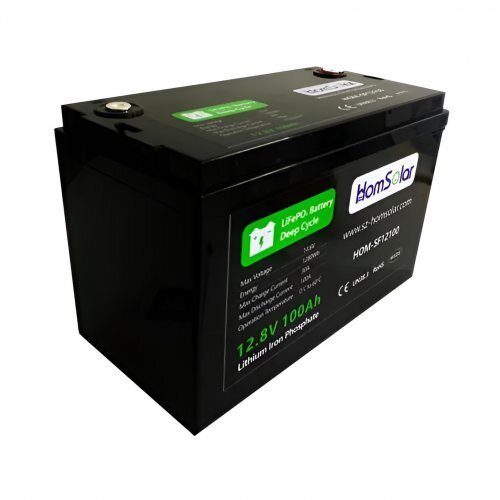
At its heart, a LiFePO4 battery is a type of lithium-ion battery that uses iron phosphate as the cathode material. This fundamental chemistry grants it a stable structure, making it highly resistant to thermal runaway and thus significantly safer than other lithium variants. The primary functions remain the same: to store electrical energy efficiently and deliver it on demand to power everything from RVs and marine equipment to solar storage systems and portable power stations.
The critical aspect for cold-weather operation revolves around charging. All lithium-based batteries, including LiFePO4, suffer from a phenomenon where lithium ions cannot intercalate properly into the graphite anode at low temperatures. Attempting to charge a frozen battery can lead to irreversible "lithium plating" on the anode's surface, which degrades performance, reduces capacity, and can pose a safety risk.
To combat this, many premium LiFePO4 batteries now integrate an essential feature: an Internal Heating System. This is arguably the most significant advancement for cold-weather operation. This system typically consists of a heating pad and a temperature sensor managed by the Battery Management System (BMS). When the BMS detects the cell temperature is below a safe charging threshold (typically around 0°C to 5°C or 32°F to 41°F), it prevents charging from an external source and instead uses a small amount of the battery's own energy, or sometimes a separate power source, to warm the cells. Once the internal temperature rises above the threshold, the BMS re-enables the charging circuit, allowing for safe and efficient power intake.
The Advantages: Why Consider a LiFePO4 for the Cold?
1. Resilient Discharge Performance: Unlike charging, discharging a LiFePO4 battery at low temperatures is far less restrictive. Most quality batteries can safely deliver power down to temperatures as low as -20°C (-4°F). This is a monumental advantage. It means that even on a frigid morning, you can still draw power to start your RV's lights, run a diesel heater, or use essential communication devices. The battery retains its ability to be a reliable power source when you need it most.
2. Integrated Cold-Weather Protection: The built-in BMS with low-temperature charge disconnect is a crucial safety net. It prevents users from accidentally damaging their expensive battery by plugging it in when it's too cold. This proactive protection is a core feature that safeguards your investment and ensures long-term cycle life.
3. Superior Cycle Life Retention: Even when operated in cold conditions (with proper charging protocols), LiFePO4 batteries maintain their legendary cycle life far better than lead-acid counterparts. A lead-acid battery subjected to deep discharges in the cold will see its lifespan dramatically shortened, whereas a LiFePO4 battery, protected by its BMS, will bounce back for thousands of cycles.
The Disadvantages and Limitations
1. The Charging Hurdle: The inability to charge below freezing without an internal heater remains the single biggest drawback. For batteries without this feature, they must be physically moved to a warmer environment to be charged, which is often impractical for installed systems like in a van or boat.
2. Parasitic Drain from Internal Heaters: The internal heating system, while brilliant, requires energy to operate. This energy is drawn from the battery itself unless a separate trickle-charge source is provided. In a stationary, off-grid solar setup during a long, cloudy cold spell, the battery might use its own stored energy to keep itself warm, slightly reducing the available usable capacity.
3. Reduced Effective Capacity: All batteries experience a reduction in available capacity at lower temperatures due to increased internal resistance. While you can still discharge a LiFePO4 battery at -20°C, you may not get 100% of its rated amp-hour capacity. The voltage may also sag more under load, though it typically recovers as the battery warms up from internal use.
Actual Usage Experience
Testing a LiFePO4 battery with an internal heater in a controlled, cold environment reveals a clear and practical operational narrative.Scenario 1: A Cold Night in a Campervan: The overnight temperature falls to -10°C (14°F). The battery, powering a diesel heater all night, has its state of charge drop to 50%. In the morning, you plug the van into shore power or start the engine to recharge. The BMS immediately detects the low cell temperature and prevents charging. Instead, the internal heater activates. You can observe a small, constant power draw on the monitor. After approximately 20-30 minutes (depending on the battery size and ambient temperature), the cells warm up sufficiently, and the BMS automatically allows the bulk charging phase to begin. The process is seamless and requires no user intervention beyond initial connection.Scenario 2: Solar Charging on a Frosty Morning: Your off-grid cabin's solar panels are covered in frost, and the battery is at 5°C (41°F). As the sun rises and the panels begin to produce a trickle of power, the BMS directs this initial energy not to charging the cells, but to the heating pad. Once the battery warms up, the full solar energy is then diverted to a normal charging cycle. This ensures that the first rays of sun are used intelligently to enable, rather than damage, the battery.
The experience is one of confidence. You are no longer anxiously checking the thermometer before plugging in a charger. The battery manages its own health. However, it does require a shift in planning; you must account for the "warm-up" time before a charging session can truly begin, which can be a consideration during short winter days with limited sunlight for solar charging.
Conclusion
Modern LiFePO4 batteries with integrated low-temperature protection and heating systems represent a significant leap forward for cold-weather power solutions. They are not "magic" batteries that ignore the laws of electrochemistry—charging below freezing remains strictly off-limits without the heater. However, their ability to reliablydischargein deep cold, coupled with an automated system that safely enables charging, makes them exceptionally versatile and robust.
For a user who primarily needs a powersourcein the cold and can manage the logistics of providing achargingenvironment above freezing (either naturally or via the built-in heater), a LiFePO4 battery is an outstanding choice. Its safety, lifespan, and now, managed cold-weather functionality, make it vastly superior to lead-acid and a more stable, longer-lasting alternative to other lithium chemistries in demanding environments. It successfully unlocks reliable power where it was once most fragile.
Product Catalogs