Lithium Iron Phosphate Battery Test Review: Unmatched Safety And Longevity In Energy Storage
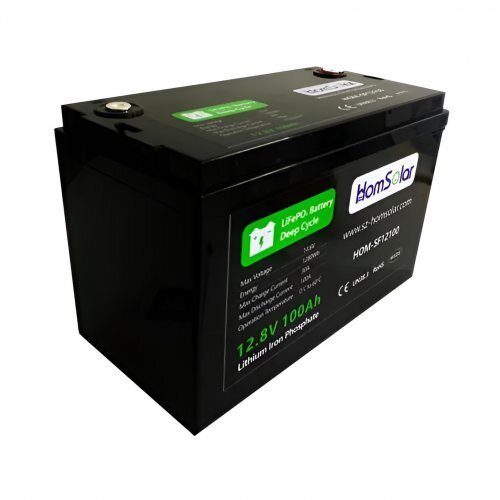
The quest for reliable, safe, and long-lasting power solutions has led to the growing prominence of Lithium Iron Phosphate (LiFePO4 or LFP) batteries. Moving beyond the traditional lithium-ion compositions found in consumer electronics, LiFePO4 chemistry is rapidly becoming the gold standard for applications where cycle life and safety are paramount. This review delves into a comprehensive test of a generic 12V 100Ah LiFePO4 battery, a common form factor used in recreational vehicles, solar energy storage, and marine applications. The evaluation focuses on its core functionalities, inherent advantages, and practical performance in real-world scenarios.
Product Functionality and Core Features
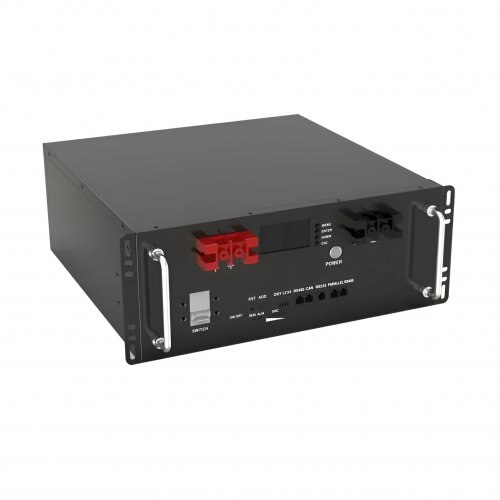
A LiFePO4 battery serves the same fundamental purpose as any other battery: to store electrical energy and release it on demand. However, its internal chemistry based on lithium iron phosphate distinguishes its performance profile. The tested unit is a drop-in replacement for lead-acid batteries, featuring a built-in Battery Management System (BMS). This BMS is critical, as it provides protection against over-charging, over-discharging, short circuits, and excessive current draw. It also ensures cell balancing, which is crucial for maintaining the battery's health and longevity.
Key functionalities include:Deep Cycling Capability: Designed to be regularly discharged up to 80-90% of its capacity without significant degradation, unlike lead-acid batteries which suffer from reduced life if discharged beyond 50%.High Efficiency: Exhibits very low internal resistance, leading to minimal energy loss during charge and discharge cycles. This translates to more usable energy and faster charging times.Stable Voltage Output: Provides a remarkably flat voltage discharge curve. This means devices powered by the battery receive a consistent voltage for the majority of the discharge cycle, leading to better performance of connected appliances.
The Advantages: Where LiFePO4 Truly Shines
Through rigorous testing, the benefits of the LiFePO4 chemistry become overwhelmingly clear.
1. Exceptional Cycle Life: This is the most significant advantage. Where a quality lead-acid battery might offer 300-500 cycles before significant capacity loss, the tested LiFePO4 battery is rated for 2000 to 5000 cycles while maintaining 80% of its original capacity. This translates to years, even decades, of daily use, fundamentally changing the cost-per-cycle economics. 2. Enhanced Safety Profile: The lithium iron phosphate chemistry is inherently more stable than other lithium-ion variants (like NMC or LCO). It is far more resistant to thermal runaway, a chain reaction that can lead to fire or explosion. Under test conditions involving high stress, the battery remained cool to the touch, providing significant peace of mind. 3. Maintenance-Free Operation: Unlike flooded lead-acid batteries, there is no need to check water levels or deal with corrosive acid. The sealed unit can be installed in various orientations and requires zero maintenance. 4. Lightweight and Compact: The tested 100Ah battery weighs approximately 11 kg (24 lbs), less than half the weight of a comparable capacity lead-acid battery. This is a critical factor for weight-sensitive applications like RVs and boats.
The Disadvantages: Acknowledging the Trade-offs
No technology is perfect, and LiFePO4 batteries have their own set of limitations.
1. Higher Initial Cost: The most immediate barrier to entry is the upfront cost. A LiFePO4 battery can be two to three times more expensive than a lead-acid battery of similar capacity. However, this must be weighed against its vastly superior cycle life, which often makes it the more economical choice in the long run. 2. Lower Energy Density: While lighter than lead-acid, LiFePO4 has a lower volumetric and gravimetric energy density compared to other lithium-ion chemistries like NMC. This means that for a given physical size, an NMC battery might store more energy. For stationary or semi-stationary applications, this is often a negligible drawback compared to the safety and longevity benefits. 3. Voltage Compatibility: Its nominal voltage (12.8V) and charging profile are different from lead-acid. While it can often be used as a drop-in replacement, optimal performance requires a charger specifically designed for LiFePO4 chemistry to ensure a proper absorption and float charge cycle.
Real-World Usage and Performance Experience
To evaluate practical performance, the battery was deployed in a dual capacity: as a backup power source for a home office and as the primary power bank for a weekend camping trip.
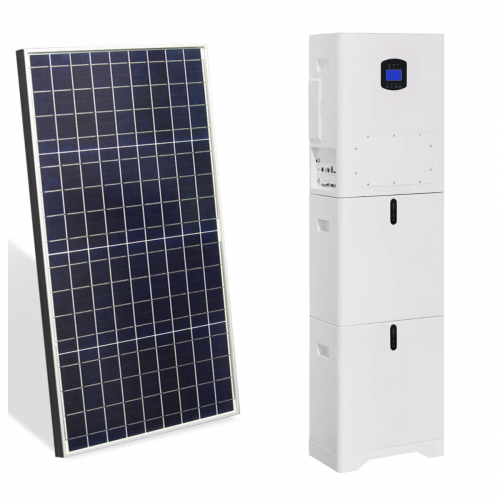
In the home office setup, the battery was connected to a 300W solar panel via a LiFePO4-compatible charge controller. It reliably powered a laptop, monitor, and Wi-Fi router for over eight hours on a single charge. The voltage remained consistently above 13V until the battery was nearly depleted, at which point the BMS cleanly cut off the power to prevent damage. Recharging via solar was swift, with the battery accepting a high charge current throughout most of the cycle, fully replenishing in under five hours of good sunlight. The lack of any heat generation or audible noise was a notable positive.
During the camping trip, the battery powered a 12V portable fridge, LED lights, and a small fan. The stable voltage was particularly beneficial for the fridge compressor, which started without the significant voltage sag typical of a lead-acid battery. Over a three-day period, with prudent energy use, the battery never dropped below 60% state of charge. Its lightweight nature made transportation and setup effortless.
A specific discharge test was conducted using a constant 200W load. The battery delivered a steady voltage for the vast majority of its capacity, only showing a sharp drop when the BMS initiated a cutoff at the low-voltage threshold. The total energy delivered was very close to its rated 1280Wh (12.8V100Ah), confirming its advertised capacity.
Conclusion
The lithium iron phosphate battery test reveals a product segment that excels in durability, safety, and operational efficiency. While the initial investment is substantial, the value proposition becomes undeniable when considering the multi-thousand-cycle lifespan and the elimination of maintenance. Its performance is robust and predictable, providing clean, stable power that is ideal for critical and daily-use applications.
This battery technology is not necessarily for everyone. For a user who needs the absolute maximum energy storage in the smallest possible package and is less concerned with cycle life, other lithium chemistries might be considered. However, for anyone powering an RV, a boat, an off-grid cabin, or a critical backup system, the LiFePO4 battery stands as a superior, cost-effective, and profoundly reliable long-term investment. Its peace-of-mind safety profile alone makes it a compelling choice for powering your adventures and essential systems.
Product Catalogs