Market Demand News: Navigating The Post-pandemic Shift Towards Hyper-personalization And Sustainability
The global economic landscape continues to be fundamentally reshaped by the evolving forces of market demand. Emerging from the disruptions of the past few years, consumer and industrial demand patterns are no longer merely recovering; they are reconstructing around new core principles, primarily hyper-personalization and sustainability. This shift is compelling industries to adapt their strategies, supply chains, and very definitions of value creation. Recent economic data, corporate earnings reports, and market analyses consistently highlight this transformative period, where understanding the nuanced drivers of demand is more critical than ever for business resilience and growth.
Latest Industry Dynamics: The Data-Driven Demand Signal
The most significant recent dynamic is the increased volatility and fragmentation of demand. The era of predictable, monolithic consumer blocks is fading. In the technology sector, for instance, demand for traditional hardware has softened, while investment in AI-integrated software and cloud services surges. Companies like NVIDIA and major cloud providers are experiencing unprecedented demand for their AI and computational infrastructure, directly fueled by the corporate sector's rush to integrate generative AI and automate processes. This contrasts sharply with the cooling demand for consumer electronics, indicating a bifurcation in the tech market.
Simultaneously, the retail and consumer goods sector is witnessing a profound change. Inflationary pressures and economic uncertainty have not uniformly suppressed spending but have redirected it. Data from recent quarterly reports from companies like Procter & Gamble and Unilever show a consistent trend: consumers are increasingly making calculated choices, trading down on non-essential items while maintaining spending on brands that demonstrate clear value, quality, or align with their personal values. This has led to a surge in demand for private-label goods in some markets, while simultaneously boosting brands with strong sustainability credentials.
The automotive industry provides a stark example of demand shock and realignment. The pent-up demand for vehicles, constrained earlier by semiconductor shortages, is now meeting a new reality: high interest rates and the rapid electrification of fleets. While demand for internal combustion engine vehicles is stagnating in many regions, the demand for Electric Vehicles (EVs) continues to grow, though at a more measured pace than initially projected, as infrastructure and cost concerns remain key considerations for the mass market.
Trend Analysis: The Ascendancy of the Conscious Consumer and Agile Supply Chains
Analysts identify two dominant, interlinked trends shaping future market demand: the demand for hyper-personalization and the non-negotiable rise of sustainability.
The expectation for personalized experiences and products has moved from a luxury to a standard market demand. This is powered by the sophisticated use of data analytics and AI. "We are moving beyond segment-of-one marketing to a model of 'moment-of-one' engagement," says Dr. Eleanor Vance, a Senior Analyst at the Global Market Insights Institute. "Market demand is no longer just about what product is sold, but about how, when, and in what context it is delivered. Consumers demand recommendations, content, and products that feel uniquely tailored to their immediate needs and past behaviors." This trend is evident across sectors, from streaming algorithms to Nike's bespoke sneaker platform, By You.
Parallel to this is the embedding of sustainability into the core of market demand. What was once a niche concern is now a mainstream purchasing factor. A recent cross-industry survey revealed that over 60% of consumers are more likely to purchase from a brand with a clear environmental and social governance (ESG) proposition. This is not just about recycled packaging; it extends to demand for circular economy models, such as resale and rental markets, which are experiencing explosive growth. Companies like Patagonia, with its Worn Wear program, and IKEA, with its furniture buy-back schemes, are directly responding to this new demand signal for responsible consumption.
Furthermore, these trends are forcing a complete overhaul of supply chain management. The just-in-time model is being supplemented by a "just-in-case" strategy, emphasizing nearshoring and digital twins to build resilience. The market demand for agility and transparency means companies must have supply chains capable of responding rapidly to sudden shifts, whether caused by geopolitical events, climate disruptions, or viral social media trends.
Expert Perspectives: Navigating Uncertainty and Future-Proofing Strategy
Industry leaders and economists emphasize the need for a proactive and nuanced approach to interpreting market demand.
"Businesses must develop deeper sensory capabilities," advises Michael Thorne, a partner at a leading management consultancy. "Relying on lagging indicators is a recipe for obsolescence. The winners in this new environment are those who can leverage real-time data, social listening, and predictive analytics to anticipate demand shifts before they fully manifest. It's about moving from being reactive to being predictive."
Dr. Lena Petrova, an economist specializing in behavioral trends, highlights the psychological underpinnings of current demand patterns. "We are observing a 'values-value' calculus. Price and quality remain paramount, but they are now filtered through a lens of personal and social ethics. The market demand for authenticity is immense. Brands that can genuinely articulate and demonstrate their purpose—be it in sustainability, ethical sourcing, or community engagement—are building deeper loyalty that can withstand economic headwinds."
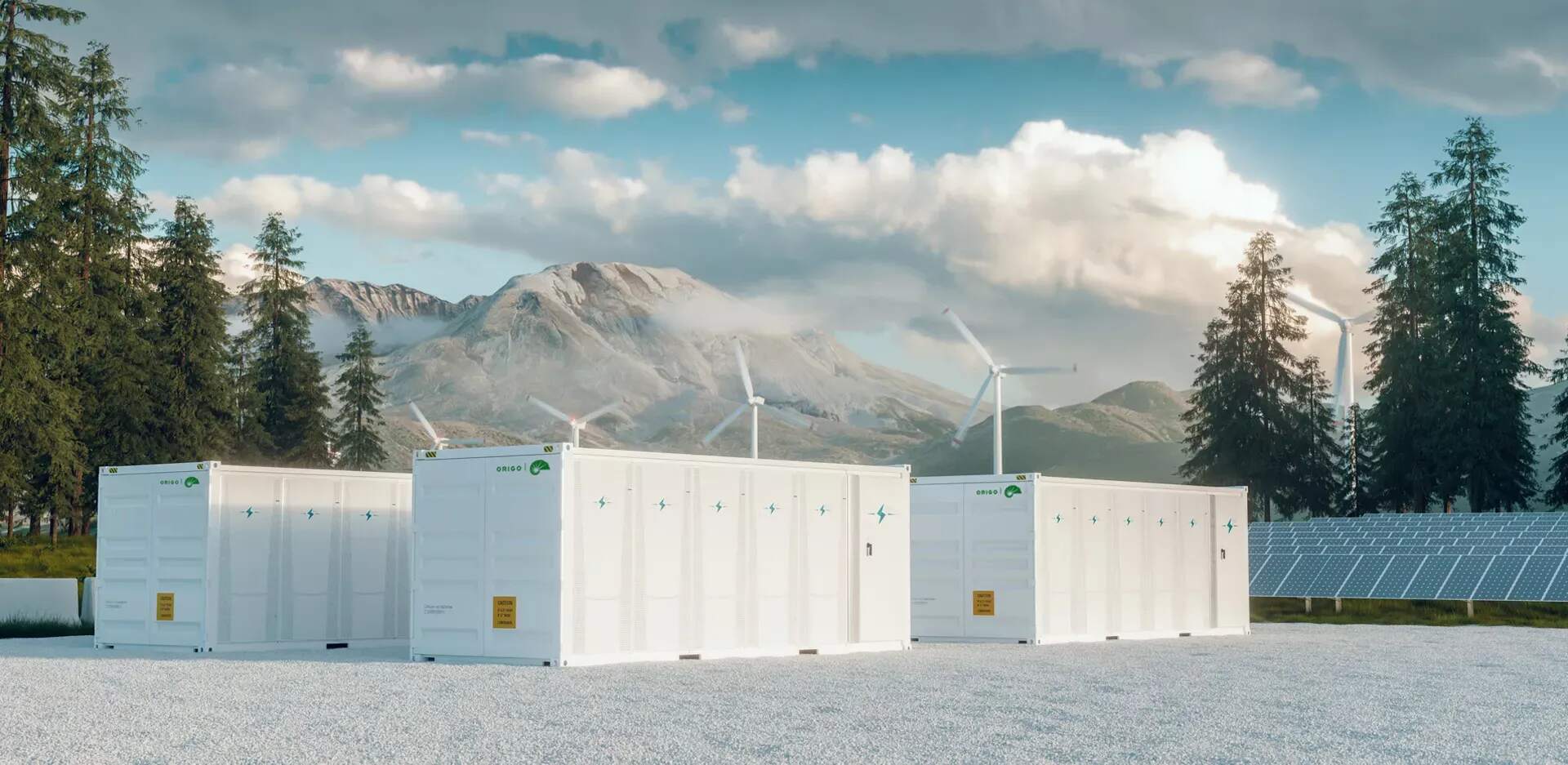
Looking forward, experts point to several key areas where market demand is expected to crystallize. The health and wellness sector will continue its expansion, with demand increasingly focused on personalized nutrition, mental health apps, and preventative care technologies. In the industrial space, the demand for robotics and automation is set to accelerate, driven by labor shortages and the need for operational efficiency. The energy transition will also create massive new demand for green technologies, from grid-scale battery storage to green hydrogen infrastructure.
In conclusion, the current state of market demand reflects a world in transition. The forces of digitalization, economic pressure, and a collective shift in consciousness are creating a more complex, fragmented, and values-driven marketplace. For corporations and investors, success will depend on the ability to listen intently to these new demand signals, demonstrate authentic value, and build organizational structures that are as dynamic and adaptable as the markets they serve. The ability to not just meet, but anticipate and shape, this new demand will be the defining competitive advantage in the coming decade.
Product Catalogs