Production Capacity News: Strategic Shifts And Technological Integration Reshape Global Manufacturing
The concept of production capacity, long a simple metric of maximum output, is undergoing a profound transformation. Across global industries, from automotive and semiconductors to consumer goods and pharmaceuticals, how companies manage, invest in, and utilize their production capabilities is at the forefront of strategic planning. Driven by the lingering effects of supply chain disruptions, geopolitical tensions, technological advancement, and the urgent push for sustainability, the management of production capacity is no longer just an operational concern but a critical determinant of resilience and competitive advantage.
Latest Industry Dynamics: From Overcapacity to Strategic Reshoring
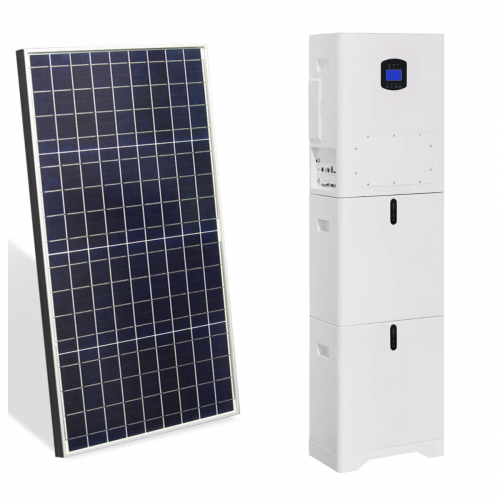
The current landscape presents a complex picture of contrasting dynamics. In certain sectors, notably electric vehicle (EV) batteries and solar panels, significant overcapacity, particularly from Chinese manufacturers, is leading to price wars and margin pressures globally. This surge in output is testing the demand absorption capabilities of international markets and prompting trade policy reactions in regions like North America and Europe.
Conversely, in high-tech industries such as advanced semiconductors and pharmaceuticals, the focus is on expanding and securing capacity. The global chip shortage that crippled the automotive and electronics industries served as a stark warning. In response, massive investment programs are underway. The U.S. CHIPS and Science Act and the European Chips Act are catalyzing the construction of new semiconductor fabrication plants (fabs) in Arizona, Ohio, and Germany, aiming to reduce geographic concentration risks. Similarly, the pandemic highlighted vulnerabilities in active pharmaceutical ingredient (API) supply chains, spurring efforts in the U.S. and EU to onshore or nearshore production capacity for critical medicines.
"Geopolitical risk has become a primary variable in the capacity planning equation," says Dr. Elena Vance, a Senior Analyst at the Global Manufacturing Institute. "Companies are no longer optimizing purely for cost-efficiency. The new calculus involves a 'China Plus One' or regionalization strategy, where building redundant capacity in geographically diverse, friendly locations is seen as an insurance policy against future disruptions. This represents a fundamental shift from the just-in-time to a 'just-in-case' paradigm."
Trend Analysis: The Rise of Smart, Flexible, and Sustainable Capacity
Several key trends are defining the future of production capacity management:
1. The Smart Factory and Capacity-on-Demand: The integration of Industry 4.0 technologies is revolutionizing capacity utilization. Through IoT sensors, AI-powered predictive maintenance, and digital twins, manufacturers are gaining unprecedented visibility into their operations. This enables a shift from fixed to flexible capacity. "We are moving towards a model of 'capacity-on-demand'," explains Michael Thorne, a partner at a consulting firm specializing in operational excellence. "By leveraging real-time data, companies can optimize machine uptime, reduce unplanned downtime, and dynamically re-route production flows. This effectively increases usable capacity without pouring concrete for a new factory. A 5-10% increase in Overall Equipment Effectiveness (OEE) can be equivalent to building a new production line."
2. Additive Manufacturing and De-centralized Production: 3D printing is emerging as a powerful tool for capacity augmentation, particularly for low-volume, high-complexity parts. In aerospace and medical devices, additive manufacturing allows for the production of components that are difficult or impossible to make with traditional methods. This not only adds a new form of capacity but also de-risks supply chains by enabling more localized, on-demand production, reducing the need for massive inventories and long-distance shipping.
3. Sustainability as a Capacity Driver: Regulatory pressures and investor expectations are making sustainable manufacturing a core business imperative. This is influencing capacity decisions in two ways. Firstly, new capacity investments are increasingly tied to green technology—renewable energy sources, energy-efficient machinery, and water recycling systems. Secondly, the circular economy model is creating "secondary" capacity. By remanufacturing and refurbishing products, companies can effectively extend the life of materials and components, reducing the strain on their primary production assets and raw material supply chains.
4. The Workforce Evolution: Expanding physical capacity is futile without a skilled workforce to manage it. The increasing automation of factories is changing the nature of shop-floor jobs, creating a growing demand for data analysts, robotics technicians, and AI specialists. The challenge of the "skills gap" is now a direct constraint on effective capacity utilization, forcing companies to invest heavily in training and upskilling programs.
Expert Perspectives: Balancing Risk, Agility, and Investment
Industry leaders and economists emphasize the need for a nuanced approach. The pendulum is not simply swinging from globalization to protectionism, but towards a more calculated, multi-faceted strategy.
"Blanket reshoring is not economically viable for most industries," argues Kenji Tanaka, an economist focusing on global trade. "The key is intelligent diversification. Companies must conduct a granular risk analysis of their product portfolios. For highly critical, bottleneck components, building secure, regional capacity is justified even at a higher cost. For more commoditized items, a diversified global supply base remains optimal. The goal is strategic resilience, not total self-sufficiency."
From an operational standpoint, the emphasis is on agility. "The factories that will thrive are those designed for change," says Maria Hernandez, CEO of a mid-sized automotive supplier. "We are investing in modular production lines and multi-skilled teams. This allows us to pivot our capacity from internal combustion engine parts to EV components much faster than competitors with rigid, dedicated lines. In today's market, the ability to reconfigure capacity is as valuable as the capacity itself."
Looking ahead, the management of production capacity will continue to be a central theme in corporate and policy discussions. The convergence of AI, robotics, and data analytics promises further gains in efficiency and flexibility. However, this technological evolution must be matched by strategic foresight and a commitment to developing human capital. In the post-pandemic era, production capacity has been revealed not merely as a measure of output, but as the physical embodiment of a company's adaptability, resilience, and long-term vision.
Product Catalogs