Production Capacity News: Strategic Shifts And Technological Integration Reshape Global Manufacturing
The concept of production capacity, long a straightforward metric of a factory's maximum output, is undergoing a profound transformation. Across global industries, from automotive and semiconductors to pharmaceuticals and consumer goods, how companies manage, plan, and invest in their production capabilities is being redefined by a confluence of geopolitical, technological, and market forces. The focus is no longer solely on scaling volume but on building resilient, agile, and intelligent capacity that can withstand disruptions and adapt to rapidly changing demands.
Latest Industry Dynamics: From Overcapacity to Strategic Reshoring
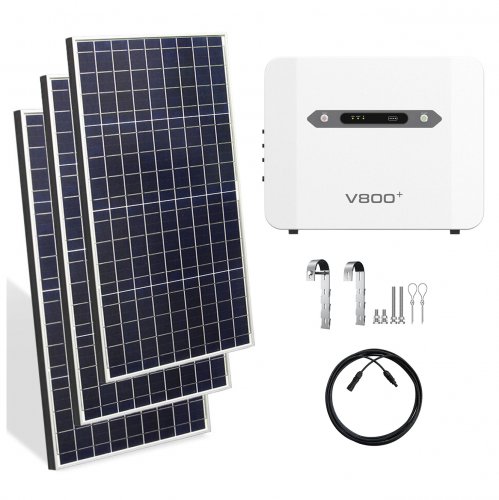
The global manufacturing landscape is currently characterized by two seemingly contradictory trends. In certain sectors, particularly renewable energy components like solar panels and electric vehicle (EV) batteries, reports of oversupply and production capacity outstripping near-term demand are prevalent. This is especially true for manufacturing hubs in Asia, where years of aggressive investment have created a surplus. Analysts note that this situation is putting downward pressure on prices and squeezing profit margins, forcing manufacturers to compete on cost and efficiency more fiercely than ever.
Conversely, a powerful counter-trend is the strategic push for "reshoring" and "friendshoring" of critical production capacities. The disruptions caused by the pandemic and ongoing geopolitical tensions have exposed the vulnerabilities of elongated, complex global supply chains. In response, governments and corporations, particularly in North America and Europe, are actively incentivizing the domestic or regional production of essential goods.
The U.S. CHIPS and Science Act and the Inflation Reduction Act are prime examples, allocating billions in subsidies to bolster domestic semiconductor and clean energy production capacity. Major automakers and battery manufacturers are announcing new gigafactory projects in the United States and Europe, explicitly citing supply chain security and policy support as key drivers. This strategic realignment is not about replacing low-cost capacity but about creating a more diversified and secure base for mission-critical industries.
"The era of optimizing supply chains purely for cost-efficiency is over," states Dr. Elena Vance, a senior fellow at the Global Manufacturing Institute. "We are now in an age of risk mitigation. Companies are building redundancy into their production networks, even if it comes at a higher initial cost. This strategic capacity, located in politically stable and allied regions, is viewed as an insurance policy against future disruptions."
Trend Analysis: The Rise of the Agile and Data-Driven Factory
Beyond geographical shifts, the very nature of production capacity is evolving, driven by technological integration. The key trends shaping its future are:
1. Capacity-on-Demand and Flexibility: The ability to scale production up or down quickly is becoming a critical competitive advantage. This is being achieved through modular factory designs, advanced robotics that can be reprogrammed for different tasks, and sophisticated production planning software. Companies are increasingly investing in flexible production lines that can manufacture multiple product variants, allowing them to respond to volatile consumer preferences without requiring massive retooling or new factory construction.
2. The Integration of AI and Predictive Analytics: Artificial Intelligence is moving from the laboratory to the factory floor, fundamentally changing capacity management. AI-powered systems can now forecast demand with greater accuracy, optimize production schedules in real-time, and predict equipment failures before they occur. This "predictive capacity" allows managers to maximize the utilization of existing assets, reducing unplanned downtime and identifying bottlenecks that were previously invisible. By analyzing vast datasets, AI can suggest optimal setpoints for machinery, improving yield and effectively increasing capacity without physical expansion.
3. Sustainability as a Capacity Driver: Environmental, Social, and Governance (ESG) considerations are no longer just a compliance issue; they are directly influencing production capacity decisions. Investments in energy-efficient machinery, water recycling systems, and carbon capture technologies are being evaluated for their long-term operational cost savings and their contribution to a company's license to operate. Furthermore, the circular economy model is gaining traction, where "remanufacturing" and recycling facilities are becoming a new form of capacity, turning waste streams back into valuable raw materials and finished goods.
An industry report from a leading consultancy highlights that manufacturers who have integrated IoT sensors and AI-driven analytics platforms have seen an average increase of 7-12% in Overall Equipment Effectiveness (OEE), effectively unlocking latent capacity within their existing operations.
Expert Perspectives: Balancing Investment with Intelligence
Industry experts emphasize a cautious yet innovative approach to capacity planning in the current climate.
Michael Thorne, a partner at a supply chain advisory firm, cautions against reactionary investments. "The pendulum can swing too far. While reshoring is strategically important, it must be done thoughtfully. The high cost of labor and energy in some regions means that new capacity must be heavily automated and technologically advanced to be viable in the long run. The business case must extend beyond government subsidies."
He adds, "The smartest players are conducting granular 'node-by-node' analyses of their supply chains to determine which parts are truly strategic and require localized capacity, and which can remain in global, cost-optimized networks."
Meanwhile, Dr. Vance points to the human element in this technological transformation. "As production systems become more intelligent, the skills required to manage them are changing. The capacity of the future is not just the machines, but the people who can interpret data, manage AI systems, and maintain complex automated lines. Upskilling the workforce is now a non-negotiable part of capacity expansion strategy."
In conclusion, production capacity is shedding its static, volumetric definition. It is now a dynamic and strategic capability, deeply intertwined with technology, geopolitics, and sustainability. The companies that will thrive are those that view capacity not as a fixed ceiling to be reached, but as a flexible, intelligent, and resilient asset to be strategically managed and continuously optimized in the face of an unpredictable world. The news in production capacity is no longer just about how much, but about how smart, how flexible, and how secure.
Product Catalogs