Ess News: Navigating The Surge In Energy Storage Systems For A Resilient Grid
The global energy landscape is undergoing a profound transformation, and at the heart of this shift lies the rapidly expanding Energy Storage System (ESS) market. Once a niche component supported by research grants and pilot projects, ESS is now a mainstream, multi-billion-dollar industry recognized as a critical enabler of the clean energy transition. Driven by ambitious climate goals, energy security concerns, and remarkable technological advancements, the sector is experiencing unprecedented growth and evolution.
Latest Industry Dynamics: From Megawatts to Gigawatts
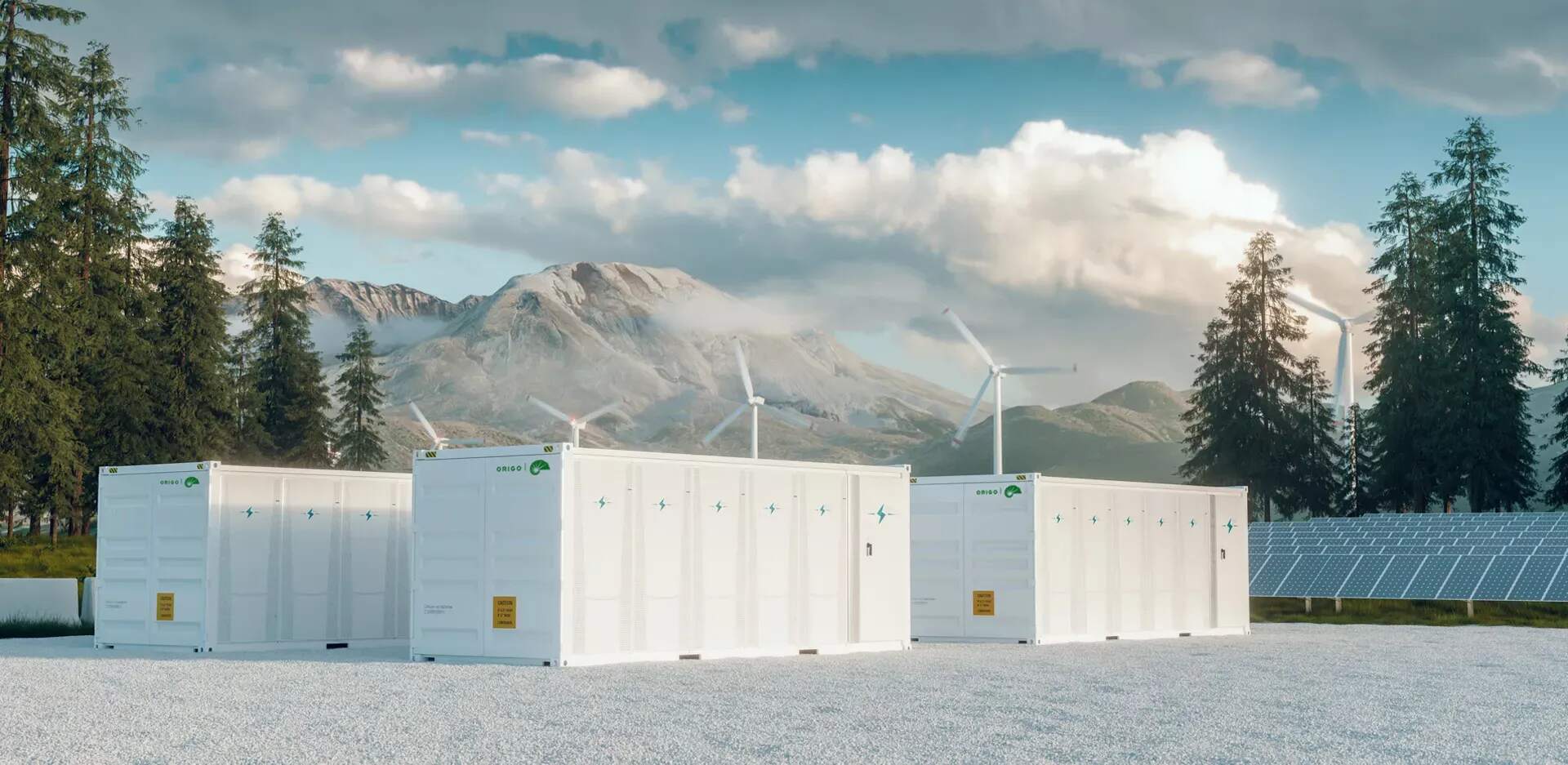
The scale of recent project announcements and deployments underscores the industry's momentum. The global energy storage market is projected to add hundreds of gigawatts (GW) of capacity over the coming decade. A significant portion of this growth is concentrated in three key regions: the United States, China, and Europe.
In the United States, the Inflation Reduction Act (IRA) has provided a monumental boost, offering standalone investment tax credits (ITCs) for energy storage. This policy change, decoupling storage from direct solar or wind generation, has unlocked vast new economic potential for projects designed for grid services and peak shaving. Major projects, such as the 1.6 GWh Moss Landing facility in California, are being dwarfed by newly announced systems, some exceeding 2-3 GWh in capacity, aimed at providing power for multiple hours to support regional grids.
Meanwhile, Europe is accelerating its ESS deployment at a breakneck pace, fueled by the urgent need for energy independence and the integration of record levels of renewable energy. Countries like Germany, the UK, and Italy are leading the charge, with a focus on both grid-scale batteries and commercial & industrial (C&I) applications. The market is also witnessing a diversification of use cases, including frequency regulation, black start capability, and the deferral of costly grid infrastructure upgrades.
In Asia, China continues to dominate both the manufacturing and deployment of ESS, particularly for its massive wind and solar bases. The Chinese market is characterized by a strong push for new chemistries beyond lithium-ion, such as sodium-ion and flow batteries, to mitigate supply chain risks and cater to different performance requirements.
Trend Analysis: Beyond Lithium and Into the Software Layer
While lithium-ion phosphate (LFP) batteries continue to be the workhorse technology due to their falling costs and proven safety profile, the industry is actively exploring a more diverse technological portfolio. This trend is driven by the need for longer-duration storage (LDES) and concerns over the geopolitical concentration of lithium and cobalt supply chains.The Rise of Long-Duration Energy Storage (LDES): As grids target 100% renewable penetration, the need to store energy for 10, 24, or even 100 hours becomes paramount. Technologies like flow batteries (vanadium, zinc-bromine), compressed air energy storage (CAES), and gravity-based solutions are moving from demonstration to early commercial deployment. These technologies promise lower "capex per cycle" for long-duration applications, challenging lithium-ion's dominance in this specific niche.Supply Chain Diversification: The search for alternatives has revitalized interest in sodium-ion batteries. With their abundance of raw materials and comparable performance characteristics to LFP, sodium-ion is poised to capture a significant market share, particularly for stationary storage where weight and density are less critical than cost and safety.The Intelligence Imperative: The real value of an ESS is no longer just in its hardware but increasingly in its software and integration capabilities. Advanced energy management systems (EMS) and AI-driven optimization platforms are becoming essential. These systems allow asset owners to stack multiple revenue streams—participating in frequency markets, trading energy arbitrage, and providing grid services—simultaneously, thereby maximizing the economic return on investment. "The future battleground for ESS vendors will be in the digital layer," notes an industry analyst from BloombergNEF. "Hardware is becoming a commodity; the smart, predictive software that controls it is where the margin and differentiation will be."
Expert Perspectives: Balancing Growth with Challenges
Industry leaders and analysts point to a sector that is maturing rapidly but still faces significant headwinds.
Dr. Elena Vance, a Senior Research Fellow at the Global Energy Institute, emphasizes the strategic shift: "We have moved past the question ofifwe need storage. The conversation is now abouthow much,where, andwhat type. The focus is shifting to creating holistic system architectures where storage works in concert with renewables, flexible generation, and demand-side response to create a resilient and cost-effective whole."
However, experts also caution that the breakneck speed of growth brings challenges. Supply chain volatility for critical minerals, despite easing from pandemic peaks, remains a concern. Furthermore, the interconnection queue backlog in many regions, particularly the U.S., is a major bottleneck. Projects can wait for years to be connected to the transmission grid, delaying decarbonization efforts and increasing costs.
On the policy front, while supportive measures like the IRA are lauded, experts call for more nuanced regulatory frameworks. "The market design in many countries has not caught up with the capabilities of storage," says Michael Thorne, CEO of a grid-scale ESS developer. "Storage is often pigeonholed as either generation or load, when in reality it is a unique asset that can be both. We need market rules that properly value the flexibility and multi-service potential of storage to unlock its full value for the grid."
Looking ahead, the integration of ESS with electric vehicle (EV) charging infrastructure and the development of virtual power plants (VPPs) are seen as the next frontier. By aggregating distributed resources—from home batteries to EV fleets—VPPs can act as a single, dispatchable resource, providing grid services without the need for building new, large-scale power plants.
In conclusion, the Energy Storage System industry stands at a pivotal moment. It is no longer an auxiliary technology but a foundational pillar of the modern energy system. While challenges around supply chains, interconnection, and market design persist, the relentless drive for a decarbonized, secure, and flexible grid ensures that the trajectory for ESS remains firmly upward, powered by continuous innovation and strategic investment.
Product Catalogs